Jean-Pierre Ponnelle
 France
- Biography of Jean-Pierre Ponnelle
- Early Career and Influences
- Notable Productions
-
Ponnelle's 1969 production of Mozart's opera "La clemenza di Tito" in Cologne, which was unjustly forgotten at that time, helped restore the opera to the repertoire of many theaters worldwide. He was also a frequent guest at the Salzburg Festival, collaborating with Herbert von Karajan. In France, Ponnelle worked with Jean Cocteau and Fernand Léger on several occasions.
Controversial Productions and Tragic End
Biography of Jean-Pierre Ponnelle
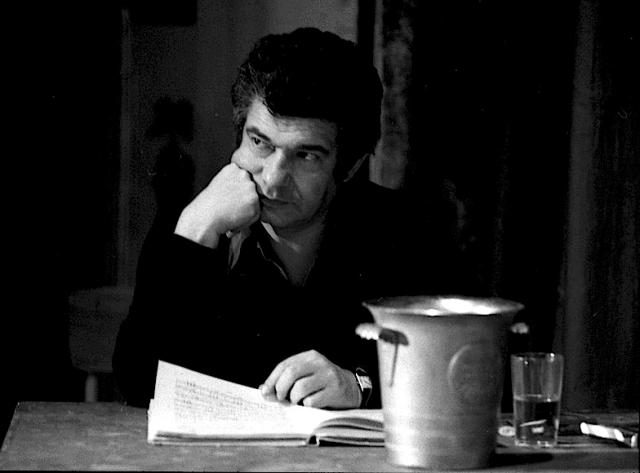
Jean-Pierre Ponnelle was a French opera director born on February 19, 1932, in Paris. His father, Pierre Ponnelle, was a journalist and wine merchant, while his mother, Mia Ponnelle, was an operetta singer. After the end of World War II, Jean-Pierre Ponnelle studied at the French Lycée in Baden-Baden, where he was introduced to contemporary music. He completed his bachelor's degree in literature, philosophy, and art history at Strasbourg and Sorbonne University in Paris, before pursuing a career in directing in Berlin.
Early Career and Influences
In 1952, Ponnelle began his career as a theater artist in Germany, with his first work being the opera "Boulevard Solitude" by Hans Werner Henze, based on the novel "Manon Lescaut." He was heavily influenced by the works of artist-designer Georges Wakhévitch, who also developed sets and costumes for theater, ballet, and opera productions. In 1957, Ponnelle married actress Margit Saad from the Baden-Badener Theater.
Notable Productions
In 1962, Ponnelle directed his first production of Richard Wagner's opera "Tristan und Isolde" in Düsseldorf. His staging of this opera at the Bayreuth Festival in 1981 was highly acclaimed and is still regarded as one of the most beautiful in the history of "Tristan und Isolde." Ponnelle's works spanned the globe and included productions at the Metropolitan Opera and San Francisco Opera, television adaptations such as "Madama Butterfly" in 1974 with Mirella Freni and a young Placido Domingo, and film versions of operas, including the famous "The Marriage of Figaro" conducted by Karl Böhm, "The Barber of Seville," "Così fan tutte," and the cantata "Carmina Burana."
Ponnelle's 1969 production of Mozart's opera "La clemenza di Tito" in Cologne, which was unjustly forgotten at that time, helped restore the opera to the repertoire of many theaters worldwide. He was also a frequent guest at the Salzburg Festival, collaborating with Herbert von Karajan. In France, Ponnelle worked with Jean Cocteau and Fernand Léger on several occasions.
Controversial Productions and Tragic End
Ponnelle's productions were often controversial. His 1986 staging of "Aida" at Covent Garden, where he replaced traditional ballet dancers with young people, was heavily booed and never revived. However, earlier productions such as "Don Pasquale" in the same theater were triumphs, along with his interpretations of other famous operas.
Jean-Pierre Ponnelle passed away on August 11, 1988, in Munich, Germany, at the age of 56 due to a pulmonary embolism after tragically falling into the orchestra pit during rehearsals for "Carmen" with the Israel Philharmonic Orchestra conducted by Zubin Mehta. He was laid to rest at Père Lachaise Cemetery in Paris. His son, Pierre-Dominique Ponnelle, became a conductor, and the renowned French guitarist and producer Jean Pierre Danel is Ponnelle's nephew.


