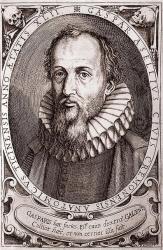
Jean Zulema Amussat
 France
Biography of Jean Suléma Amussat
Jean Suléma Amussat was a French physician, surgeon, anatomist, and educator. He was born on November 21, 1796, in the town of Saint-Mexan-l'École in the department of Deux-Sèvres, France, into a family of physicians. He received his first medical education from his father, surgeon Servan.
Amussat was called to military service in 1814 at the age of 17. As a young man, he performed numerous surgical operations on the battlefield during the Napoleonic Wars. While serving in the army, he extensively studied anatomy by analyzing the injuries sustained by soldiers on corpses.
After the war, despite financial difficulties, he traveled to Paris to continue his medical education. One of his mentors was Trusseau, who allowed him to participate in anatomical dissections at the Salpêtrière Hospital. As a student at the University of Paris, Amussat obtained a position at the Hôpital Charité through competition. He also received accommodation at the hospital, providing him with ample opportunities to further his medical education.
Nila Mon Theodore Lemière (1770-1836), who noticed his interest in pathological anatomy, helped him and allowed him to work at his clinic. Two years later, through another competition, Amussat obtained a practice and returned to the Salpêtrière Hospital. While working here, he conducted research on the spinal cord, specifically focusing on identifying pathological changes that could be caused by epilepsy. During this time, he invented the rachiotome, which became widely used in surgical practice. He also began giving private lectures on anatomy for artists.
In December 1821, he became an assistant prosector through competition, which allowed him to deepen his knowledge in anatomy, surgery, and operative techniques. However, his attempt to compete for the position of prosector at the faculty was unsuccessful as he nearly died from an infection, significantly compromising his health. After a series of illnesses, he had to give up the competition for the position of prosector. With no prospects in the medical faculty and the opportunity to work as a physician in a hospital, he was forced to establish a private practice.
Amussat was elected a member of the Paris Medical Academy in 1824, even before receiving his medical degree. In 1826, he defended his doctoral dissertation at the Paris Medical Academy on the topic "Some considerations on the study of anatomy." In this work, he emphasized the importance of animal experiments for physiological purposes.
In 1831, he organized a course on military field surgery for young physicians who were to join the African army. Jean Suléma Amussat died from diphtheria on May 13, 1856. He was buried at the Père-Lachaise Cemetery in Paris. His heart was removed and transported to Saint-Mexan-l'École on January 16, 1857, where it was interred. His son, Auguste Alphonse Amussat (1829-1878), also rests in the same tomb.
Scientific Achievements:
In 1827 and 1828, Amussat conducted a series of studies on traumatic bleeding and methods to stop it. In 1829, he presented the method of twisting arteries at the Paris Institute. This was a brilliant invention by Amussat, which would forever be associated with his name. One of his achievements was the revival of the almost forgotten sectio alta - a high incision - for bladder stones in surgical practice. Although his surgical interests varied, he focused on operations involving the bladder, prostate gland, and abdominal organs. The originality of his work is evident from the professional awards he received: 2,000 francs for lithotripsy, 6,000 for artery twisting, 4,000 for the description of air embolism, and 3,000 for what was then called "artificial anus" - colostomy.