Walter Dandy
 USA
USABiography of Walter Dandy
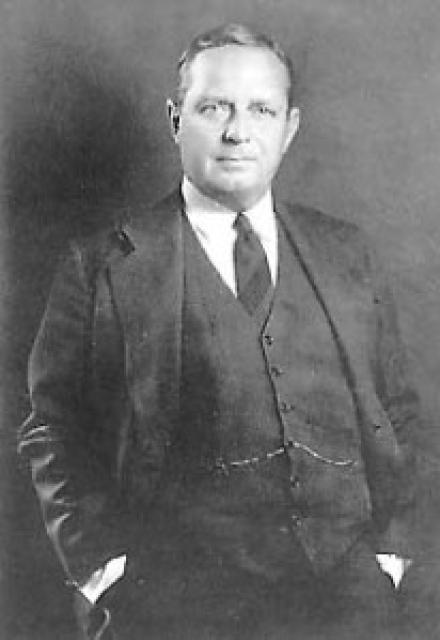
Walter Dandy was an American neurosurgeon and scientist. He is considered one of the founding fathers of neurosurgery and is known for numerous discoveries and innovations. Dandy was born on April 6, 1886, in Sedalia, Missouri. He was the only son of John Dandy, a railroad engineer, and Rachel Kilpatrick, immigrants from Lancashire, England, and Armagh, Ireland.
Education and Career
Dandy completed his high school education in Sedalia in 1903 and graduated from the University of Missouri in 1907. In September 1907, he enrolled in the second year of the Johns Hopkins University School of Medicine. In the spring of 1910, at the age of 24, he completed his medical degree and worked in the laboratory of experimental medicine under the guidance of Harvey W. Cushing.
In 1911, Dandy began his residency in surgery, which he completed in 1918. During his residency, he worked under the guidance of Cushing, as well as William S. Halsted and Howard A. Kelly. In 1918, Dandy became a full-fledged physician at Johns Hopkins Hospital and focused entirely on neurosurgery.
After Halsted's transfer to the University of Cincinnati in 1922, Dandy remained the only neurosurgeon at Johns Hopkins Hospital until his death in 1946. He married Sady E. Martin on October 1, 1924, and they had four children together. Dandy passed away from a heart attack on April 19, 1946, and was buried at Druid Ridge Cemetery in Pikesville, Maryland.
Contributions to Neurosurgery
Throughout his 40-year career, Dandy published five monographs and over 160 scientific articles. He made significant contributions to the field of neurosurgery, including the description of cerebrospinal fluid circulation, surgical treatment of hydrocephalus, and the introduction of ventriculography and pneumoencephalography into practice. Dandy was also the first to perform the clipping of an intracranial aneurysm, marking the birth of vascular neurosurgery.
Dandy's research on hydrocephalus led to the classification of "obstructive" and "communicating" forms of the condition, laying the foundation for its scientific study. He also made significant advancements in imaging techniques by developing ventriculography and pneumoencephalography, which allowed visualization of intracranial abnormalities using X-rays.
Dandy's contributions to neurosurgery continue to be recognized and utilized to this day. Many of the techniques he described in his publications are still employed in surgical procedures. His groundbreaking work on the surgical treatment of intracranial aneurysms in 1938 marked the emergence of vascular neurosurgery. He also performed surgeries for arteriovenous malformations, arteriovenous fistulas, and carotid-cavernous fistulas.
In 1944, Dandy summarized his experience in vascular neurosurgery in the book "Intracranial Arterial Aneurysms." His dedication and immense contributions have solidified his place as a pioneer in the field of neurosurgery.