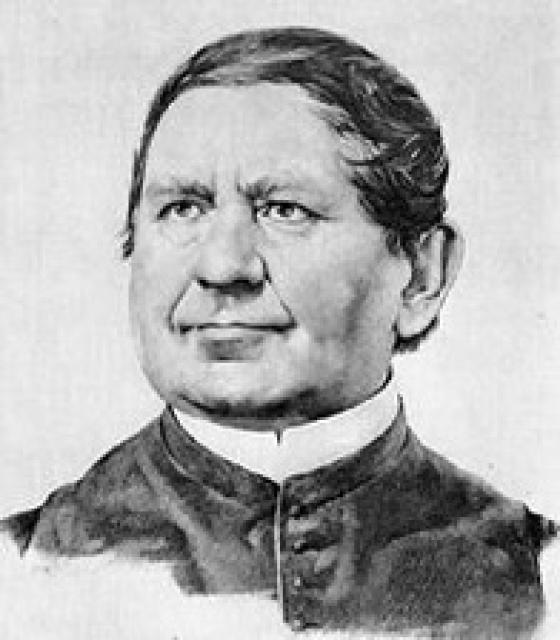
Jedlik Istvan Anyos
 Hungary
- Ányos Jedlik: A Pioneering Hungarian Physicist and Inventor
- Academic Career
- Scientific Contributions
- The Dynamo Machine
- Electrical Engineering Innovations
- Legacy
Ányos Jedlik: A Pioneering Hungarian Physicist and Inventor
Early Life and EducationÁnyos Jedlik, a Hungarian physicist, inventor, and electrical engineer, was born in Trencsén (present-day Slovakia) in 1800. He attended schools in Trnava and Bratislava before joining the Benedictine Order in 1817.
Academic Career
Jedlik's academic pursuits began in 1839 when he became a professor at the University of Buda (later renamed the University of Budapest). Over the next four decades, he taught a range of scientific subjects, including physics, mathematics, and mechanics. In 1863, he was elected Rector of the university.
Scientific Contributions
Jedlik made significant contributions to the field of electricity. He is widely recognized as one of the inventors of the electric motor. In 1829, he constructed the first small electric motor, predating similar inventions by Michael Faraday by four years.
The Dynamo Machine
In 1827, Jedlik also developed the first dynamo machine, a device that converts mechanical energy into electrical energy. However, he initially kept this invention secret until the late 1850s.
Electrical Engineering Innovations
Jedlik's pioneering work extended to other areas of electrical engineering. He invented an electric locomotive in 1840 and a functional battery from coal-zinc elements in 1854. He also developed a chain scheme for connecting batteries and a method for discharging accumulators.
Legacy
Ányos Jedlik's contributions to science and technology had a profound impact on both Hungary and the global scientific community. He was a pioneer in the field of electrical engineering and helped shape the development of modern physics. Today, Jedlik's legacy is honored through scientific institutions and awards named after him, such as the Jedlik Ányos Polytechnic and the Jedlik Prize for Excellence in Physics.


