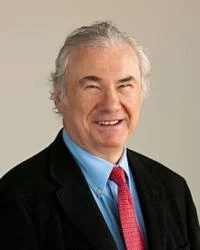
Jeffrey Hopkins
 USA
- Childhood and Education
- Building a Career in Tibetan Studies
- Translator to the Dalai Lama
- Books and Scholarship
- Personal Life and Later Years
- Legacy
Born Paul Jeffrey Hopkins in Barrington, Rhode Island, in 1940, Jeffrey Hopkins became one of the most influential American scholars to bring Tibetan Buddhist philosophy into English-language universities and publishing. His career joined academic rigor with unusually close collaboration with Tibetan teachers: he built a major program of Tibetan and Buddhist studies at the University of Virginia, translated for the Dalai Lama, and wrote and edited dozens of books that made complex philosophical traditions accessible to students and general readers.
Childhood and Education
Hopkins attended Pomfret School before entering Harvard University. He graduated magna cum laude in 1963, then spent five years studying at the Lamaist Buddhist Monastery of America in New Jersey, now known as the Tibetan Buddhist Learning Center. There he studied with Geshe Wangyal, a Mongolian-born Tibetan Buddhist teacher whose influence helped shape Hopkins’s long-term commitment to the subject.
Rather than treating Tibetan Buddhism only as an object of academic study, Hopkins pursued both scholarly training and direct engagement with its living traditions. He went on to the University of Wisconsin, where he earned a doctorate in Buddhist Studies in 1973. His graduate work developed into a lasting interest in Madhyamaka, the Buddhist philosophical tradition often translated as the “Middle Way,” and especially its analysis of emptiness.
Building a Career in Tibetan Studies
In 1973 Hopkins joined the University of Virginia’s religious studies faculty. Tibetan and Buddhist studies had little institutional presence there at the time, so he helped create programs that would give the field a permanent home. He taught Tibetan language and Tibetan Buddhist Studies for more than three decades, advising generations of students and helping establish UVA as a leading center for the study of Tibetan Buddhism in the West.
His classroom work was closely connected to research and translation. Hopkins worked with Tibetan scholars and monastic communities, emphasizing collaboration with learned practitioners. He also served as director of UVA’s Center for South Asian Studies for twelve years. After retiring from full-time teaching in 2005, he continued to write, translate, teach and lecture.
Translator to the Dalai Lama
From 1979 to 1989, Hopkins served as the Dalai Lama’s chief interpreter into English on lecture tours. The role took him across North America, Europe and Asia and placed him at the meeting point of religious teaching and international public life. His fluency in Tibetan and grounding in Buddhist philosophy allowed him to translate not just words but arguments whose meaning depended on specialized traditions and vocabulary.
The work also reinforced his conviction that scholarship should be in conversation with Tibetan teachers. Hopkins translated and edited works associated with the Dalai Lama and major Tibetan thinkers, including Tsongkhapa and Dolpopa. His English versions helped readers encounter debates that had long circulated primarily within Tibetan scholastic communities.
Books and Scholarship
Hopkins’s best-known scholarly work, Meditation on Emptiness, became a major English-language study of Tibetan Madhyamaka thought. It reflected the combination that defined his writing: close attention to philosophical argument alongside an effort to explain how these ideas function in Buddhist practice. Across his career, he authored, translated or edited more than fifty books, with his work appearing in translation in numerous languages.
His publications ranged widely across Buddhist philosophy, meditation and tantra. Among them were Tantric Techniques, The Heart of Meditation and translations and studies of Tibetan teachings. He also helped introduce less familiar currents of Tibetan thought to English readers. Mountain Doctrine, his translation and study of a foundational Jo-nang text on “other-emptiness,” brought an important work from that tradition into wider scholarly circulation.
Hopkins was known for presenting intricate ideas with energy and conviction. His public identity was not that of a detached cataloguer of beliefs: he was a scholar-practitioner who taught Buddhist material to monastics as well as university students, and who regarded sustained practice and close reading as complementary ways of understanding the tradition.
Personal Life and Later Years
Hopkins spoke openly in autobiographical writing about his spiritual experiences and personal convictions. He described memories that he understood as belonging to a previous life in Tibet; these were his own accounts, not independently verifiable historical claims. His willingness to discuss such experiences stood out in academic settings, where scholars often keep personal religious commitments out of public view.
Even after becoming professor emeritus, Hopkins remained an active teacher. He gave online instruction to monastics and other students in his later years, continuing almost to the end of his life. He died in July 2024, aged 83. The University of Virginia announced his death as July 1; some tributes reported a different July date.
Legacy
Hopkins’s legacy is visible in both institutions and books. At UVA, the programs he founded helped train scholars who carried Tibetan studies into a new generation. His translations and commentaries gave English-speaking readers access to demanding Tibetan philosophical texts, while his long service as the Dalai Lama’s interpreter connected those traditions with international audiences.
Colleagues and students remembered a teacher who combined formidable scholarship with personal dedication to the material he taught. For many readers, Meditation on Emptiness remains a landmark guide to Tibetan Buddhist philosophy; for the wider field, his career helped make Tibetan studies a durable part of American university life.