Jehu
Jehu seized Israel’s throne in a violent coup and founded a dynasty that ruled for nearly a century. The biblical account remembers him as an instrument of judgment against the royal house of Ahab, while an Assyrian monument gives an independent glimpse of the new king paying tribute to a powerful neighbor. Both records capture a ruler whose ascent reshaped Israel’s politics.
Rise to the throne
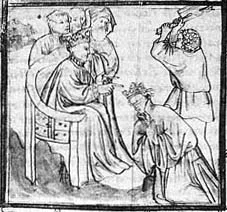
Jehu was a commander in the Israelite army. According to the biblical Books of Kings, the prophet Elisha sent a messenger to anoint him king while he was with fellow officers at Ramoth-Gilead. Jehu’s fellow commanders quickly backed the revolt, and he rode west to Jezreel, where King Joram was recovering from wounds.
Jehu killed Joram and also killed Ahaziah, king of Judah, who was visiting him. The biblical narrative then describes the death of Jezebel, Joram’s mother, and the destruction of the remaining members of Ahab’s dynasty. The account is vivid and politically charged: it presents the coup as fulfilling prophetic judgment, while also documenting the ruthless violence by which Jehu secured the throne.
Reign and religious policy
Jehu ruled the northern Kingdom of Israel from about 841 to 814 BCE, though ancient chronology varies slightly. He brought the Omride dynasty to an end and established his own line. The biblical account credits him with dismantling the state-sponsored worship of Baal associated with Ahab and Jezebel. It also describes a mass killing of Baal’s worshippers, carried out after Jehu announced a religious gathering as a trap.
The same narrative criticizes Jehu for retaining the golden-calf sanctuaries at Bethel and Dan, which were associated with the earlier northern king Jeroboam. His reforms therefore had clear limits: he removed one powerful cult while preserving practices that supported the northern kingdom’s separate religious institutions.
Assyria and the Black Obelisk
Jehu’s reign is also attested outside the Bible. The Black Obelisk of the Assyrian king Shalmaneser III records tribute from “Jehu, son of Omri,” in the Assyrian king’s eighteenth year, conventionally dated to 841 BCE. The monument, now in the British Museum, includes a relief of a figure bowing before Shalmaneser and attendants carrying offerings.
The Assyrian label does not mean that Jehu was literally Omri’s son. Assyrian scribes often used a kingdom’s established dynastic name for its ruler; “House of Omri” was their designation for Israel. The tribute indicates that Jehu sought to secure his rule by recognizing Assyrian power, as regional kings frequently did when faced with a much larger empire. The biblical narrative does not mention this payment, so the monument provides a distinct perspective on his early reign.
Dynasty and legacy
Jehu’s son Jehoahaz succeeded him, followed in turn by Jehoash, Jeroboam II, and Zechariah. The dynasty lasted four generations, longer than any other northern Israelite royal house described in the biblical account. Its later rulers presided over very different circumstances, including periods of territorial recovery and eventual instability.
Jehu’s reputation remains tied to the tension between religious reform and political violence. In Kings, he is praised for destroying Ahab’s cult but condemned for failing to change other religious practices. The Assyrian record, meanwhile, places his new regime within the international politics of the ninth century BCE. Together, the accounts show how a coup at home and diplomacy abroad helped establish a durable royal line.