Jennifer Ashwood
 Great Britain
- British Woman with Rare Bicornuate Uterus Gives Birth to Twins
- Discovery of a Bicornuate Uterus
- Pregnancy with Twins
- Birth of Twins
- Recovery and Family Life
British Woman with Rare Bicornuate Uterus Gives Birth to Twins
A young British woman surprised the medical world when she became pregnant with twins, one in each of her two uteruses. This rare occurrence happens in only one in 500 million births.
Discovery of a Bicornuate Uterus
Jennifer Ashwood, a 31-year-old social worker, was astonished when doctors revealed she had two uteruses, each with a developing fetus. This anomaly occurs in only one in 500 million births, and fewer than 100 cases have been recorded worldwide. Ashwood is believed to be the only known case in her home country.
Pregnancy with Twins
Most women with bicornuate uteruses like Ashwood's only carry a baby in one chamber. Ashwood had her first child, an eight-year-old daughter named Millie, this way. "I had carried a baby before," said Ashwood, "and it had been a normal pregnancy. This time, my body surprised me."
In December 2017, Ashwood and her firefighter husband, Andrew, were delighted to learn they were expecting twins. However, in February 2018, they received a "slight curveball." Doctors discovered that Jennifer had two uteruses, each carrying a baby.
Birth of Twins
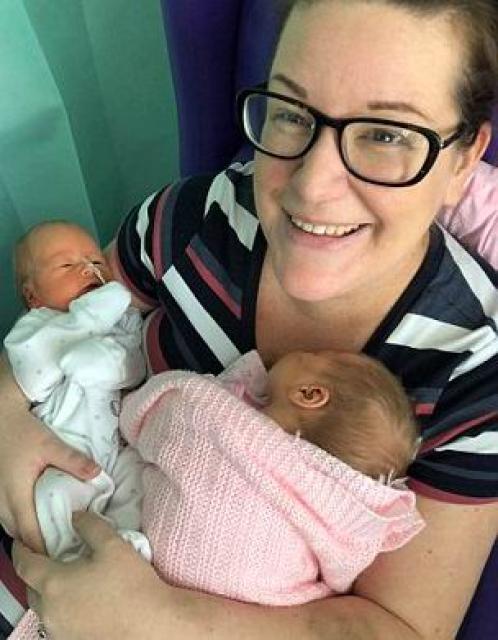
Ashwood's bicornuate uterus, a birth defect that developed while she was in the womb, didn't affect conception but significantly increased the risk of miscarriage and premature birth. On the 34th week of pregnancy, Ashwood underwent a cesarean section and gave birth to a 5.6-pound boy named Piran and a 5.1-pound girl named Poppy.
Recovery and Family Life
The twins went home after two weeks of treatment for jaundice. "To have two wombs is rare enough, but to actually have eggs in both of them, and working eggs, and them to be in the right place...it's like a miracle," said Ashwood. "You think you know your body, but you don't."
Ashwood admitted to experiencing much more intense morning sickness during her second pregnancy compared to her first. Due to the unique conditions of the twins' development, doctors were hesitant to predict their progress and waited for their birth to assess their health. "We're just on the go all the time now," added Ashwood. "We don't get much sleep, but I don't think we'd get much more if we had one baby. We're giving double the cuddles and double the love."
Eight-year-old Millie has gradually adjusted to her new siblings. When told she would have a brother and sister, she insisted she wanted only one. However, her perspective changed over time.