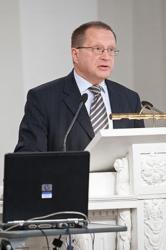
Jerom Bruner
 USA
USABiography of Jerome Bruner
Jerome Seymour Bruner, an American psychologist and educator, made a significant impact on the entire American education system. Born on October 1, 1915, in New York, Bruner became a leading expert in the field of cognitive processes. He received his education from Duke University, where he obtained a Bachelor of Arts degree in 1937, and from Harvard University, where he earned a Master's degree in 1939 and a Doctor of Philosophy degree in 1941.
During World War II, Bruner served in the army in France from 1941 to 1944. After his military service, he worked as a lecturer and later as an associate professor of psychology at Harvard University, specializing in perception, cognition, development, and attitudes. In 1952, Bruner became a professor and the director of the Center for Cognitive Studies at Harvard University, where he held the position from 1951 to 1952 and again from 1961 to 1972. In 1972, he joined Oxford University in the United Kingdom as a professor.
Early in his career, Bruner conducted research on the psychological state of refugees from Nazi Germany. His studies revealed a decrease in their level of aspirations, professional ambitions, and social inclination. He was one of the first researchers to investigate how needs and value orientations influence the process of perception. He concluded that perception is selective and can be distorted by motives, goals, attitudes, or defense mechanisms. He demonstrated that the higher the value attributed to objects, the larger they appear in physical size. Additionally, he showed that during frustration, neutral words are perceived as anxious and threatening.
Based on these findings, Bruner proposed distinguishing between "autonomous" factors of perception, which depend on biologically significant characteristics, and "directive" factors, which depend on personal past experiences and hypotheses formed on their basis. He coined the term "social perception" to denote the dependency of perceptual processes on past experiences. He viewed the holistic process of perception as based on three forms of representation of the surrounding world: action-based, imagery-based, and language-based.
Bruner developed the theory of perceptual hypotheses, in which all cognitive processes are interpreted as the imposition of categories, representing rules of association, onto objects or events. Categorization involves a series of decisions regarding whether an object has "critical" attributes, the next object to be examined for the presence of these attributes, and which hypothesis about the importance of the attributes to choose next. Conceptual learning occurs as the child learns which properties of the environment are relevant for grouping objects into specific classes.
Through his cross-cultural research, Bruner provided a definition of intelligence as the result of a child's assimilation of the "amplifiers" (both technical and symbolic) of their motor, sensory, and cognitive abilities, which vary across different cultures. He interpreted Piaget's phenomena and the transition from concrete to formal operations as a process of children acquiring the demands placed on them by society, in accordance with their stage of development.
Bruner also developed research methodologies for the formation of artificial concepts. He adamantly argued that with an adequate approach to their education, every child can master any subject. He believed that all children possess curiosity and the desire to solve educational tasks, but when they encounter overly complex tasks, they quickly experience failure and boredom.
Overall, Jerome Bruner had a significant influence on the entire American education system.