Jeyms Reinuoter
 USA
USA- Leo James Rainwater: A Pioneer in Nuclear Physics
- Childhood and Education
- Research at Columbia University and the Manhattan Project
- Return to Columbia: Developing the Nevis Cyclotron
- Collective Model of the Nucleus
- Inspired by a Conference: Ellipsoidal Nuclear Shape
- Confirmation and Nobel Prize
- Personal Life and Legacy
Leo James Rainwater: A Pioneer in Nuclear Physics
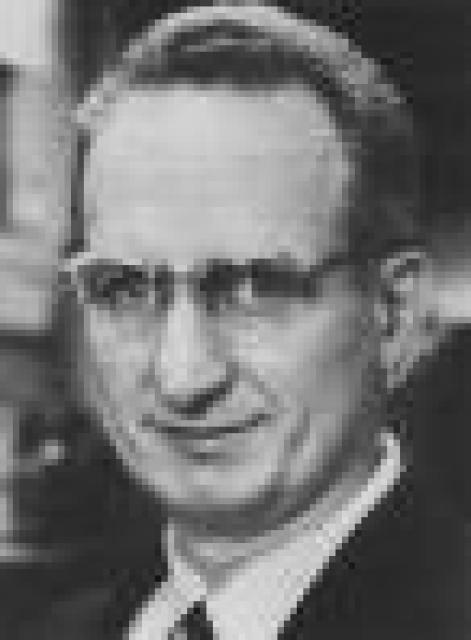
Leo James Rainwater, an American physicist, was born in Council, Idaho, on December 9, 1917. His father, Leo Jasper Rainwater, worked as a civil engineer, and his mother, Edna Eliza (nee Tigg) Rainwater, ran a general store. Tragically, his father died from influenza in 1918, and the family relocated to Hanford, California, where Rainwater's mother married again.
Childhood and Education
Rainwater excelled academically, particularly in chemistry, physics, and mathematics. After winning a statewide chemistry competition sponsored by the California Institute of Technology (Caltech), he enrolled in Caltech as a chemistry major. However, he soon switched his focus to physics, where he studied under esteemed scientists like Carl D. Anderson for physics and Thomas Hunt Morgan for biology. In 1939, Rainwater graduated with a bachelor's degree in physics.
Research at Columbia University and the Manhattan Project
Rainwater pursued his graduate studies at Columbia University, where he encountered renowned physicists such as I. I. Rabi, Enrico Fermi, and Edward Teller. However, with the outbreak of World War II, Rainwater suspended his dissertation research and joined the Manhattan Project as a member of the Office of Scientific Research and Development. Working under J. R. Dunning at Columbia, he used the university's cyclotron to investigate how atomic nuclei behaved when bombarded with neutrons.
Return to Columbia: Developing the Nevis Cyclotron
Following the war, Rainwater's wartime research was declassified, and he was awarded his doctorate in 1946. As a professor at Columbia, he continued his experimental work in physics. With funding in 1946, the university began constructing the Nevis Cyclotron Laboratory and its synchrocyclotron, a particle accelerator capable of reaching far higher energies than previous cyclotrons. Rainwater played a key role in the accelerator's development, which became operational in 1950.
Collective Model of the Nucleus
In 1949, Danish physicist Aage Bohr joined Columbia as a visiting professor and became Rainwater's office mate. Their discussions on the fundamental structure of nuclei led to Rainwater's breakthrough idea. Two dominant nuclear models existed at the time: the liquid drop model and the shell model.
The liquid drop model, proposed by Aage Bohr's father Niels Bohr in 1936, likened the nucleus to a droplet of liquid, capable of vibrating and changing shape. While it successfully explained nuclear fission, it fell short in describing other key properties. The shell model, introduced in 1949 by Maria Goeppert-Mayer and J. Hans D. Jensen, depicted nucleons (protons and neutrons) moving in independent, concentric orbits or shells, mirroring the behavior of electrons in an atom. However, it failed to account for the electrical charge distributions in certain nuclei.
Inspired by a Conference: Ellipsoidal Nuclear Shape
In late 1949, Charles H. Townes presented a talk at Columbia highlighting the discrepancies between shell model predictions and experimental results. Rainwater, listening intently, wondered how to reconcile these differences. It occurred to him that the filled shells of nucleons in the nucleus might be distorted by centrifugal forces, resulting in an ellipsoidal rather than spherical shape. After convincing Aage Bohr of the merit of this idea, Rainwater published his hypothesis in 1950 and began seeking experimental evidence.
Confirmation and Nobel Prize
Aage Bohr, who had been mulling over similar ideas, returned to Copenhagen in 1950 determined to develop a comprehensive theory of nuclear behavior. Collaborating with Ben R. Mottelson, he published the collective model of the nucleus in 1952, incorporating Rainwater's idea to reconcile the "hydrodynamic" behavior described by the liquid drop model with the orbital properties of nucleons described by the shell model.
According to Bohr and Mottelson, the collective action of nucleons led the nucleus to behave like a liquid drop. However, it also possessed a shell structure that could deform into an ellipsoid-like shape. This deformation manifested as surface vibrations, rotations, and oscillations. Such collective motions were absent in the shell model, which ignored interactions between nucleons.
Using the collective model to calculate deformable nuclei and analyzing extensive experimental data, Mottelson and Bohr confirmed Rainwater's hypothesis in 1953. Rainwater, meanwhile, resumed his experimental studies at Columbia's synchrocyclotron, where he discovered discrepancies in the estimated size of the proton, indicating its value had been overestimated.
In 1952, Rainwater was promoted to full professor at Columbia. From 1946 to 1978, he remained affiliated with the Nevis Cyclotron Laboratory, twice serving as its director (1951-1953, 1956-1961). For their work, Rainwater, Aage Bohr, and Mottelson were jointly awarded the Nobel Prize in Physics in 1975. In his Nobel lecture, Rainwater summarized the research leading up to and following his pivotal discovery.
Personal Life and Legacy
Rainwater married Emma Louise Smith in 1942. They had three sons and one daughter who died in infancy. In his spare time, he pursued interests in geology, astronomy, and classical music. Rainwater passed away in Yonkers, New York, on May 31, 1986, shortly after retiring from Columbia University.
In addition to the Nobel Prize, Rainwater received the Ernest Orlando Lawrence Award in Physics from the U.S. Atomic Energy Commission (1963). He was a member of the U.S. National Academy of Sciences, the Institute of Electrical and Electronics Engineers, the New York Academy of Sciences, the American Association for the Advancement of Science, and the American Physical Society. His legacy as a pioneer in nuclear physics continues to inspire generations of scientists.