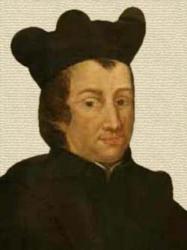
Boris Grabovsky
- Early Life and Education
- Military Service and Education
- Early Work and Collaboration
- The Invention of the Electronic Television
- Recognition and Controversy
- Legacy and Mystery
Early Life and Education
Boris Pavlovich Grabovsky, a pioneering Soviet physicist and inventor, was born in Tobolsk, Russia, on May 26, 1901. His father, Pavel Arsenevich Grabovsky, was an exiled Ukrainian poet-revolutionary. After his father's death in 1902, Grabovsky's mother, Anastasia Nikolaevna Gutovskaya, moved with her son and mother to Odessa, Kharkov, and eventually Central Asia. In early 1917, the family settled in the Kyrgyz village of Tokmak.
Military Service and Education
Grabovsky volunteered for the Red Army and served in various units before attending the Tashkent Soviet Party School. After completing his studies, he continued his military service in special forces (Peshpek ChON).
Early Work and Collaboration
Upon his demobilization, Grabovsky settled in Tashkent, where he initially worked as a wire winder at TashTram. He then joined the laboratory of the Physics and Mathematics Faculty of the Central Asian University (SAU) as a laboratory assistant. In 1924, he moved to Saratov to pursue his education and took private lessons from physicist N.G. Piskunov. They became close collaborators, along with young radio engineer V.I. Popov, and worked together on various inventions.
The Invention of the Electronic Television
In 1926, Grabovsky returned to Tashkent with his collaborators, hoping to continue their work. On July 26, 1928, he successfully transmitted the first wireless, moving image using an all-electronic television system. The event was recorded in an official protocol, marking a significant milestone in the history of television.
Recognition and Controversy
Grabovsky's system, which he called "Telephot," incorporated electronic amplifiers, scanning generators, and synchronization devices. Its fundamental principles closely resembled modern television transmission schemes. Grabovsky delivered lectures and presented his invention in various cities across the Soviet Union.
While Grabovsky's contributions to television are widely acknowledged, some modern historians have questioned the priority of his invention. Nevertheless, he was awarded the honorary title of "Honored Inventor of the Uzbek SSR" in 1965.
Legacy and Mystery
Boris Pavlovich Grabovsky passed away in 1966 in Frunze, now known as Bishkek. His technical diaries, containing detailed records of his experiments, are believed to have disappeared mysteriously and later resurfaced in the novel "My Brother, My Enemy" by Mitchell Wilson. According to other sources, the documents were never lost but were withheld in Moscow by the Central Bureau of Rationalization and Invention of the USSR Supreme Economic Council.