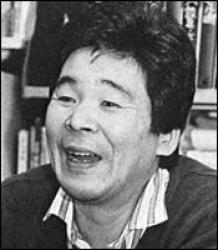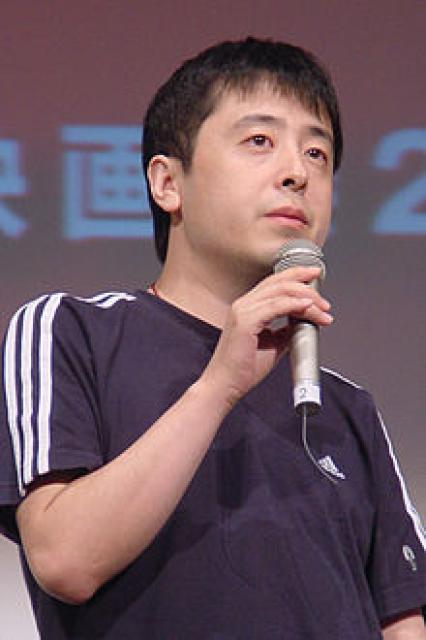
Jia Zhangke
 China
ChinaJia Zhangke: A Biographical Exploration
The Sixth Generation FilmmakerJia Zhangke is a leading film director in the People's Republic of China, belonging to the so-called "Sixth Generation," which succeeded the "Fifth Generation" exemplified by directors such as Zhang Yimou and Chen Kaige. While the Fifth Generation films largely specialized in spectacular, mythical epics that were deeply infused with social critique, often drawing government censorship, the Sixth Generation predominantly makes realistic films set in contemporary China, often far from the reach of state censorship. The financing for such films often comes from foreign sources, rather than relying on government funding. The works of directors like Jia, Zhang Yuan ("East Palace, West Palace," 1997), and Wang Xiaoshuai ("Beijing Bicycle," 2001) are often made without government approval, and hence largely circulate in China only via illegal copies and pirated video. These films focus on the lives and experiences of ordinary people in contemporary China, exploring controversial topics such as sex, official corruption, unemployment, drug use, prostitution, and AIDS. The directors frequently improvise, casting non-professional actors to evoke a sense of the "everyday" China they seek to capture.
As Jia himself explains the distinction: "In the 80s, the Fifth Generation were real heroes: they freed Chinese cinema from formulas and allowed everything to change. But they evolved: in today's films, you don't find the lives of the Chinese people. The way I make films allows me to describe the Chinese reality without distortions."
Curiously, when it comes to describing the aesthetics of Jia's cinema, critics and scholars seem to shy away from comparisons to his Fifth Generation predecessors. Instead, they turn to foreign auteurs. Kent Jones traces Jia's camerawork back to Hou Hsiao-hsien and Yasujiro Ozu. And Jonathan Rosenbaum has linked his films to the work of Hungarian director Miklós Jancsó. Jones also notes Jia's similarities to Jean-Luc Godard and Robert Altman, due to their shared ability to capture the rhythms of life, dreams, and the behavior of entire generations. And Stephen Teo points to the work of Raoul Ruiz, seeing in both Jia and Ruiz a depiction of youthful ennui - a "Simple Stupidity." In all, Jia's work has been influenced not just by Hou and Ozu, but also by Robert Bresson, Federico Fellini, and Vittorio De Sica.
These illustrious references might give a misleading impression to those unfamiliar with Jia's films. The specificity of his aesthetics can get lost in these comparisons to cinematic luminaries. One might simply accept as a given that Jia's films are characterized by a sense of the uncanny. This uncanny, or strange quality, haunts his characters and hinders their ability to cope with the transformations taking place in their lives. Sixth Generation directors focus on depicting the dramatic eccentricities of their immediate surroundings. What elevates Jia Zhangke above them is his heightened sense that events on screen are steered by vast, inscrutable forces that emanate from beyond the frame.
Jia's significance on the global cinematic scene lies in his representation of contemporary China. Jia's "China" immerses us in the general mood and trends of modern-day China. And it is this immersion that has such a powerful effect on viewers.
Though Jia was born in 1970 in Fengyang, a small village in Shanxi Province, his parents were not peasants. They had been sent to the countryside because his grandfather had worked as a surgeon in Europe. Watching Jia's films set in Shanxi, one can see that his peasant childhood strongly informs his aesthetics.
With the implementation of Deng Xiaoping's economic reforms in the late 80s (these reforms are referenced in Jia's film "Platform"), huge socio-economic changes swept through China. These changes came first and foremost to the urban centers along the coast, but gradually infiltrated the agrarian interior regions, such as Shanxi. The rural areas had always been, not just geographically but also politically, economically, and even culturally, removed from the sources of change in their own country. As depicted in Jia's films, the process of social transformation reaches a heightened state of cultural incongruity. For example, in "Platform," when a peasant father chastises his son for wearing flared trousers, he utters the comically anachronistic phrase: "How are you supposed to FARM in those things?" This forced "modernization" on unprepared peasants fuels the director's imagination. The state of bewilderment and inadequacy regarding the new cultural paradigms and rules becomes a running theme throughout Jia's work.
Jia's desire to capture this cultural disorientation is realized onscreen in his stunning one-hour short film "Xiao Shan Going Home" (1995), which he made while at the Beijing Film Academy. Xiao Shan, played by Jia's film-school classmate Wang Hongwei, is an unemployed cook living in Beijing. All he wants, it seems, is to return to his hometown for Chinese New Year. He sets out with a fellow villager to buy gifts, and enlists the help of friends to purchase a train ticket. These seemingly innocuous desires encounter unexpected obstacles and lead to the ultimate shattering of his plans. This simple story of a village boy lost in "the big bad city" may well be loosely autobiographical. It also portrays the experiences of the hundreds of millions of Chinese who, like Xiao Shan, moved from rural areas to the cities in search of work and a better life. Jia ties Xiao Shan's odyssey to a wider social phenomenon by including in the film the full text of a newspaper article about the massive New Year migration. This is just one of several remarkable inserts used in the film.
Jia's career as a filmmaker began with this film. Much of the commentary within the film is taken from everyday Chinese life: one, a brief summary of the protagonist's education and career aspirations; another, a deadpan account of Xiao Shan's visit to a neighbor's home to watch television, followed by a posted schedule of that evening's TV broadcasts. Unlike most student films, there is a sense of experimentation with different techniques and strategies. This experimental style reveals an everyday China that has never been seen before on Chinese screens. The filmmaker pokes fun at the official tone of Chinese radio broadcasts and high literature by inserting them into mundane contexts.
If Jia's stated aim is to restore reality to Chinese cinema, nowhere is this more fully realized than in the film's sound design. As the opening credits roll, a woman speaks rapidly in an unspecified dialect, without even Chinese subtitles translating her words, rendering her unintelligible to both Chinese and non-Chinese audiences. The viewer listens to her voice without understanding a single word she says, creating a sense of estrangement, of otherness, even within one's own culture.
This technique of "auditory distanciation" takes on pointedly personal significance when Jia casts himself as one of Xiao Shan's friends at a large student gathering, and (after a few pints of beer) lets loose a speech in the Shanxi dialect, the dialect of Jia's birthplace. It is as if Jia himself is compensating for seventy years of Chinese cinema that was made in Standard Chinese in accordance with the state's national language policy. Jia's use of dialect aligns him with the remarkable work of Hou Hsiao-hsien with the multiple dialects of Chinese cinema. In this way, he emerges as the voice of a cultural minority within his own country. Paradoxically, he speaks for a majority of Chinese people – especially those from rural areas – who speak their own non-standard local languages. Thus, Jia's insights are profoundly informed by his recognition of the remarkable diversity of local Chinese customs.
But if an awareness of the distinctions and similarities within one's own country ultimately involves onscreen representation of local subcultures, it is equally a matter of foreign cultural influence. Again, the realm of sound becomes a battleground of cultures. Thus, the songs on the soundtrack, such as The Carpenters' saccharine 70s hit "Yesterday Once More," a cover version of Edith Piaf's "Hymne à l'amour," and the 1990s MTV hits "Runaway Train" (Soul Asylum), "Mmm Mmm Mmm" (The Crash Test Dummies), serve as potential "cannon fodder" for the viewer. Their inclusion may or may not be arbitrary. Jia's filmmaking technique often involves simply letting his camera and microphone capture whatever happens to occur within the time frame of the film. But there is hardly any other film made in China (or perhaps any other country) that so gently provokes the realization that the world we live in is saturated with diverse cultural influences.
Yet what is perhaps most fascinating about the choice of these particular songs is the way they resonate with the themes of the story. The Carpenters' nostalgic elegy for a more innocent past, Soul Asylum's tragic ode to an outcast's existence, and the Crash Test Dummies' anecdotally bittersweet ballad – all chime perfectly with Xiao Shan's story. The songs fit so well that one wonders: is Jia using them to make associations, and if so, is he doing so deliberately? Is he using them simply as signifiers of "the West"? How much meaning do Chinese viewers (both urban and rural) or foreign viewers find in them? The variety of materials that enter the frame, and the viewers' ability to make sense of it all, are at stake here. Who are they for? Where do they belong? And what associations do they evoke for viewers? Jia's cinema is a dynamic, unregulated process of interpreting and exchanging cultures, both within and beyond national boundaries.
"Xiao Shan Going Home" provided Jia with the opportunity to travel abroad when he presented it at the 1997 Hong Kong Independent Short Film Festival, where it won