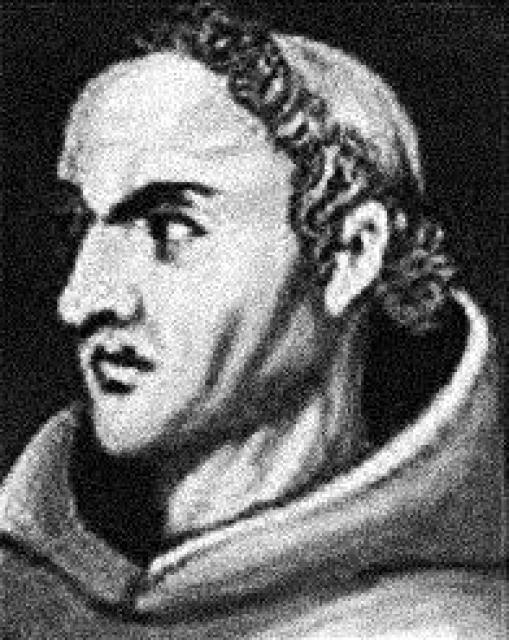
Joannes Buridanus
 France
- Jean Buridan: A Medieval Scholar and Pioneer
- Early Life and Education
- Academic Career and Influence
- Legendary Connections
- Mount Ventoux Experiment
- Commentaries on Aristotle
- The Concept of Impetus
- The Problem of Free Will
- Legacy
Jean Buridan: A Medieval Scholar and Pioneer
Jean Buridan (c. 1300-1363) was a prominent French philosopher, logician, and theologian who played a pivotal role in the development of medieval thought.
Early Life and Education
Born around 1300, Buridan studied at the University of Paris (Sorbonne) under the renowned William of Ockham. His education in logic and philosophy laid the foundation for his later contributions to these fields.
Academic Career and Influence
In 1328, Buridan began teaching at the Sorbonne, where he became known as a master of logic. He was a respected teacher and mentor, and his students included Albert of Saxony. Buridan's ideas had a profound influence on medieval scholarship.
Legendary Connections
Buridan's life is shrouded in legend, including rumored connections with Jeanne of Navarre, wife of King Philip IV of France. These legendary tales have contributed to his enigmatic status.
Mount Ventoux Experiment
Buridan is also remembered for his alleged visit to Mount Ventoux in southern France. The purpose of this expedition, as depicted in legends, was to measure the height of the mountain.
Commentaries on Aristotle
Buridan's philosophical writings took the form of commentaries on Aristotle's works. Through these commentaries, he sought to reconcile Aristotelian ideas with Christian theology.
The Concept of Impetus
Buridan introduced the influential concept of impetus, a moving force that he believed was imparted to projectiles. This theory challenged Aristotelian notions of motion and influenced the development of modern mechanics.
The Problem of Free Will
Buridan considered the problem of free will to be logically irresolvable. He is often associated with the famous paradox of choice, known as "Buridan's Ass," which illustrates the difficulty of making decisions in the absence of a clear preference.
Legacy
Jean Buridan's ideas continue to be studied and debated by scholars today. His contributions to medieval philosophy and science have earned him a place among the most influential thinkers of his time.




