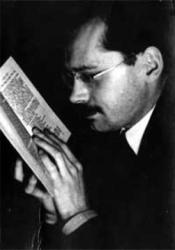
Maria Zambrano
 Spain
Spain- Maria Zambrano: Spanish Writer and Catholic Philosopher-Essayist
- Early Life and Education
- Emigration and Exile
- Life and Work in Exile
- Contributions and Recognition
Maria Zambrano: Spanish Writer and Catholic Philosopher-Essayist
Maria Zambrano was a renowned Spanish writer, as well as a Catholic philosopher-essayist. She was born into a family of intellectuals, with her father Blas Zambrano being a well-known liberal educator and a close friend of Antonio Machado, a renowned Spanish poet.
Early Life and Education
Zambrano attended lectures by prominent philosophers such as Xavier Zubiri and Jose Ortega y Gasset at the University of Madrid. From 1931 to 1936, she served as a professor of metaphysics at the same university and was preparing her dissertation on Spinoza. During this time, she was also involved with influential literary journals such as "Revista de Occidente" and "Cruz y Raya". Zambrano developed close friendships with writers such as Luis Cernuda, Miguel Hernandez, and Camilo Jose Cela.
Emigration and Exile
In 1936, Zambrano and her husband, historian Alfonso Rodriguez Aldave, moved to Latin America when he was appointed as a secretary to the embassy in Chile. While in Santiago de Chile, she published an anthology of works by the executed poet Federico Garcia Lorca in 1936. She also visited Cuba, where she befriended Jose Lezama Lima and delivered a lecture on Jose Ortega y Gasset. In 1937, Zambrano returned to Spain, while her husband went to fight on the frontlines to defend the Republic. After the victory of the Francoists on January 28, 1939, Zambrano crossed the border into France, marking the beginning of her many years in exile.
Life and Work in Exile
During her time in exile, Zambrano lived, worked, and taught in various cities, including Paris, New York, Mexico City, Havana, and San Juan (Puerto Rico). She resided in Paris from 1946 to 1949, then returned to Havana from 1949 to 1953. In 1964, she settled in Rome, and by 1980, she had moved to Geneva. In 1984, Zambrano returned to Spain and lived in Madrid. Throughout her exile, she maintained friendships and correspondences with notable figures such as Octavio Paz, Jose Lezama Lima, Xavier Bergamin, Luis Cernuda, Helena Gilen, Gabriel Marcel, Albert Camus, and Raymond Aron, among others.
Contributions and Recognition
In 1987, the Maria Zambrano Foundation was established in Veles-Malaga, Spain. In 1988, Zambrano was awarded the prestigious Miguel de Cervantes Prize. Her thoughts revolved around two interconnected themes: the fate of Spain, which encompassed the destiny of European liberalism and democratic republics, and philosophical anthropology of a holistic, sacrificial personality with a reliance on the role and possibilities of poetry, particularly the poetry of Spanish mystics like San Juan de la Cruz. Zambrano's public speeches, articles, and books on these topics became a significant factor in unifying and fostering intellectual creativity among Spanish intellectuals during the period of exile.