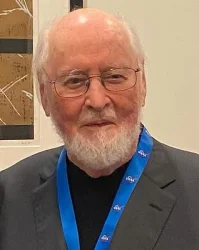
Joaquín Rodrigo
Joaquín Rodrigo became one of the most recognizable voices in twentieth-century Spanish music, giving the guitar a place at the center of the concert hall. His lyrical melodies and vivid evocations of Spain reached listeners around the world, especially through the work that would become his signature, the Concierto de Aranjuez.
Early life and musical studies
Rodrigo was born in Sagunto, near Valencia, on November 22, 1901. A serious illness in early childhood left him almost completely blind. He began studying music as a child and developed as a pianist and composer, learning to work with scores through Braille and dictation.
In 1927 he moved to Paris to continue his musical education. There he studied composition with Paul Dukas, whose guidance helped him refine a style that joined modern technique with Spanish musical traditions. Rodrigo met the Turkish pianist Victoria Kamhi in Paris; they married in 1933 and remained close artistic partners throughout their lives.
The concerto that captivated the world
Rodrigo composed the Concierto de Aranjuez in Paris in 1939, drawing on the atmosphere of the royal gardens at Aranjuez and on Spanish folk and historical influences. The concerto was premiered in Barcelona on November 9, 1940, with guitarist Regino Sainz de la Maza as soloist. Its slow movement, with its haunting dialogue between guitar and orchestra, became especially beloved.
The work brought Rodrigo international recognition and transformed expectations of what the guitar could do in orchestral music. He continued to write for the instrument, including Fantasía para un gentilhombre, composed in 1954 for Andrés Segovia. His output also ranged across concertos, orchestral pieces, piano music, songs, and chamber works.
A long creative life
Rodrigo and Kamhi returned to Spain in 1939 and settled in Madrid, where he built a sustained career as a composer, teacher, and writer on music. Their daughter, Cecilia, was born in 1941. Rodrigo received major Spanish honors during his lifetime, and in 1991 King Juan Carlos I granted him the hereditary title Marquis of the Gardens of Aranjuez.
Rodrigo died in Madrid on July 6, 1999, aged 97. His music is often associated with the Concierto de Aranjuez, yet his broader catalogue shows a composer who repeatedly explored the guitar’s colors and the many strands of Spanish musical identity.
Legacy
The Concierto de Aranjuez remains among the best-known concertos of the modern classical repertoire. Its popularity introduced generations of listeners to the classical guitar, while Rodrigo’s wider body of work secured his place as a defining Spanish composer of the twentieth century.