Roger Waters
- Cambridge roots and Pink Floyd’s beginnings
- The band’s defining albums
- A solo career and public voice
- An enduring and contested legacy
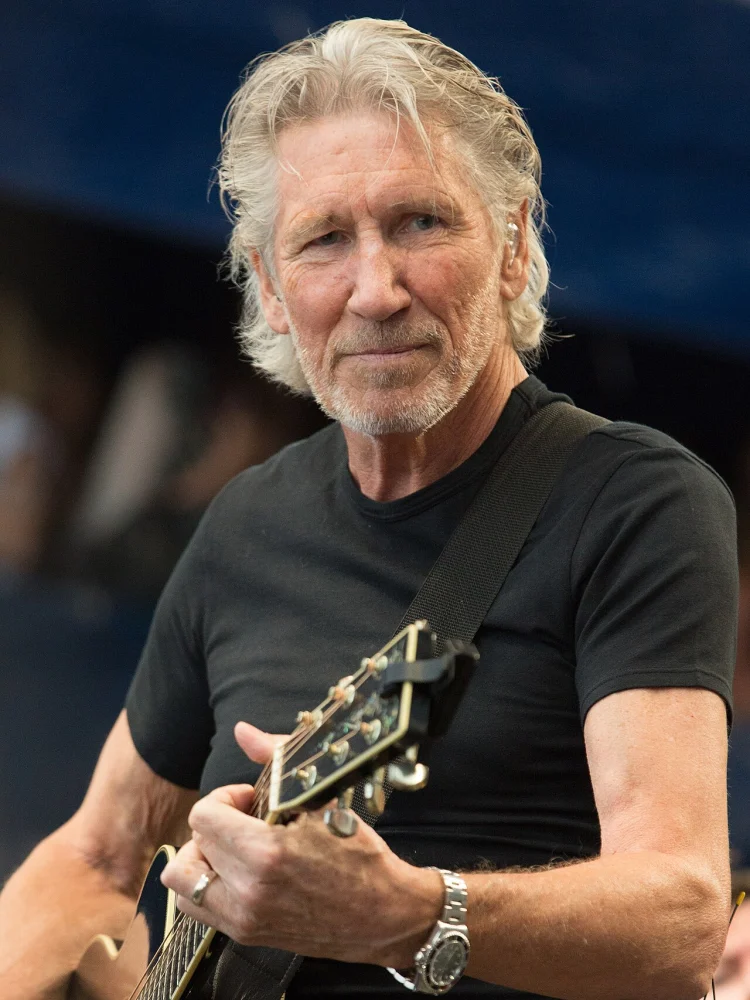
Roger Waters helped turn Pink Floyd into one of rock’s most ambitious concept bands. As its bassist, lyricist and central creative force through much of the 1970s, he shaped albums that fused personal grief with broad questions about alienation, power and war. His solo career carried those themes forward, while his outspoken political views and long-running disputes with former bandmates kept him a polarizing public figure.
Cambridge roots and Pink Floyd’s beginnings
Waters was born in Great Bookham, England, on 6 September 1943. His father, Eric Fletcher Waters, died in Italy during the Second World War when Roger was still an infant. He grew up in Cambridge with his mother and brother; the loss of his father and the experience of growing up without him became recurring themes in his songwriting.
In the early 1960s, Waters moved to London to study architecture at Regent Street Polytechnic. There he met fellow students Nick Mason and Richard Wright. With childhood friend Syd Barrett, they formed the group that became Pink Floyd. Barrett initially led the band’s sound and songwriting, while Waters played bass and began contributing songs. After Barrett left in 1968, David Gilmour joined, and Waters increasingly took charge of lyrics and the band’s conceptual direction.
The band’s defining albums
Pink Floyd’s international breakthrough came with The Dark Side of the Moon in 1973, an album exploring time, money, mortality and mental strain. Waters wrote many of its lyrics, and its long run on the charts turned the band into a global phenomenon. Wish You Were Here followed in 1975, reflecting on absence and the music business, while Animals (1977) used an Orwellian framework to examine class and power.
The Wall, released in 1979, became Waters’ most personal and theatrical project. Its story of a rock musician building emotional barriers drew on feelings of isolation and the loss of his father. The album spawned an elaborate concert production and a 1982 film directed by Alan Parker. The Final Cut (1983), largely conceived and written by Waters, returned to themes of war and the postwar generation.
Growing divisions within Pink Floyd led Waters to leave the group in 1985. A legal dispute followed over the band’s future and its name; Gilmour and Mason continued as Pink Floyd. The split did not end public interest in the group, and Waters reunited with his former bandmates for a brief performance at Live 8 in 2005.
A solo career and public voice
Waters released solo albums including The Pros and Cons of Hitch Hiking, Radio K.A.O.S. and Amused to Death, continuing his interest in political conflict, mass media and social isolation. His later work included Is This the Life We Really Want? (2017) and a solo re-recording of The Dark Side of the Moon released in 2023. His large-scale tours have revisited The Wall and other Pink Floyd material for new audiences.
In public, Waters has often used concerts and interviews to speak about anti-war causes, human rights and political power. His direct statements on international conflicts have also drawn sharp criticism and disagreement. As with his songwriting, his politics are difficult to separate from his public image: supporters see an artist willing to challenge authority, while detractors object to his rhetoric and positions.
An enduring and contested legacy
Pink Floyd’s records remain fixtures of popular music, and Waters’ lyrics helped give the band’s most celebrated work its narrative force. His career is marked by both collaboration and conflict: he helped create a distinctive group sound with Barrett, Mason, Wright and Gilmour, then pursued an uncompromising solo vision after the band split. Decades later, his music still reaches vast audiences, even as his outspoken public persona continues to divide them.