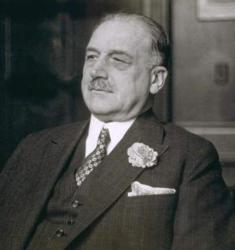
Johan Beyen
 Netherlands
Biography of Johan Willem Beyen
Johan Willem Beyen, a Dutch banker, civil servant, politician, and diplomat, was born on May 2, 1897, in Utrecht, Netherlands. His father, Karel Hendrik Beyen, was a lawyer and the head of the railway company 'Maatschappij tot Exploitatie van Staatsspoorwegen'. Beyen's mother, Louisa Maria Coenen, came from a musical family, and Beyen himself had a deep passion for music. He played the cello daily and brought his instrument on all his foreign trips. Beyen had two brothers, one of whom became a renowned archaeologist.
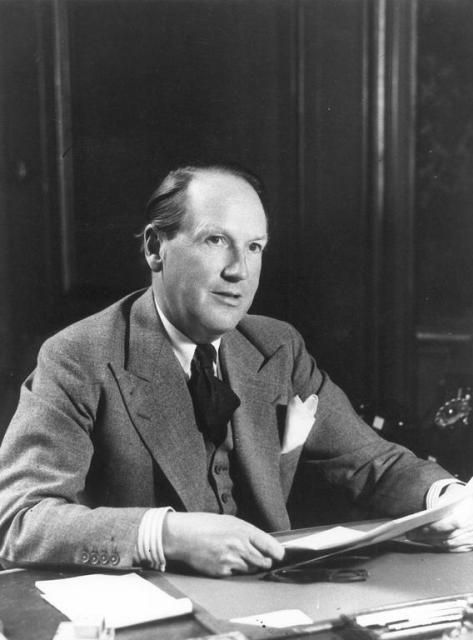
In 1922, Beyen married and had two sons with his wife. However, by the late 1930s, he began an affair with Austrian Margarethe Antonie Lubinka. After the end of World War II, Beyen divorced his first wife and married his beloved Gretel. This marriage brought him great happiness.

Beyen grew up in Utrecht and studied at the local university. In 1918, he obtained his doctorate in law. After completing his studies, Beyen secured a temporary position as an assistant at the Dutch Ministry of Finance. Over the next few years, he rose to the position of Deputy Minister. From 1924 onwards, Beyen held several leadership positions in the private sector. He served as the head of the board of 'Philips' and the Dutch branch of the Central Bank of the Dutch East Indies. He was also director of one of the predecessors of 'AMRO Bank', Vice President and President of the Bank for International Settlements in Basel, and director of 'Unilever'.

During World War II, in addition to his role at 'Unilever', Beyen served as a consultant to the Dutch government in exile in London. In 1944, he played a crucial role at the Bretton Woods Conference, which resulted in the establishment of the World Bank and the International Monetary Fund. From 1946, Beyen represented the Netherlands in the council of the World Bank and from 1948, in the International Monetary Fund.
In 1952, Beyen, who did not belong to any political party, was appointed Minister of Foreign Affairs to maintain a balance of political power in the government. He held this position for four years until the end of his political career after the 1956 elections. Beyen played a crucial role in the creation of the European Economic Community (EEC). In August 1954, when France refused to ratify the treaty, plans for the creation of a European political community and joint armed forces collapsed. Beyen recognized that political integration of Europe was not feasible in the near future and believed that the integration of European countries should begin in the economic field. He developed a plan for the creation of a common European market and merged it with the ideas of a political community.
On April 4, 1955, Beyen sent a memorandum to his colleagues from the Benelux countries, Paul-Henri Spaak of Belgium and Joseph Bech of Luxembourg, proposing a customs union. On April 23, 1955, the three foreign ministers met in The Hague and drafted a memorandum, which was completed on May 18, 1955. Two days later, they presented the memorandum to the governments of France, Germany, and Italy, suggesting a discussion on the ways to integrate the European economy at the upcoming conference of the six participating countries in the European Coal and Steel Community. At this conference, held from June 1 to June 3, 1955, in Messina, Italy, Beyen led the Dutch delegation. The final decision of the conference largely reflected Beyen's viewpoint and formed the basis for further work on the establishment of the European Economic Community and the European Atomic Energy Community in 1957, as well as the modern European Union.
After leaving the position of Minister of Foreign Affairs, Beyen spent some time negotiating with Germany on border issues. In 1958, he was appointed the ambassador of the Netherlands to France and served in this role until 1962. After retiring, Beyen held several leadership positions in the banking business. He passed away on April 29, 1976.