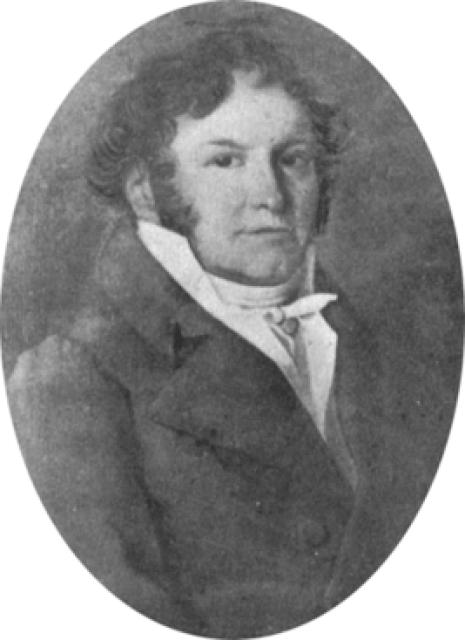
Johann Gravenhorst
 Germany
Johann Ludwig Christian Gravenhorst (November 14, 1777 – January 14, 1857) was a German zoologist and entomologist whose research helped document European beetles and parasitic wasps. A professor of natural history and the first director of the University of Breslau’s natural history museum, he is best known for his extensive studies of ichneumon wasps, published in the three-volume Ichneumonologia Europaea.
Education and early research
Gravenhorst was born in Braunschweig, in the Duchy of Brunswick. He initially studied law, but soon turned to the natural sciences at the University of Göttingen. He earned a doctorate and began teaching zoology and natural history there, while developing a particular interest in beetles.
His early books included Coleoptera Microptera Brunsvicensia (1802) and Monographia Coleopterorum Micropterorum (1806), works that established his reputation as an entomologist. They focused on small beetles, especially rove beetles, and showed his careful attention to classification and species description.
Academic and museum career
In 1810, Gravenhorst became professor of natural history and director of the botanical garden at the University of Frankfurt an der Oder. The university moved to Breslau the following year, and he moved with it. In 1814, he helped establish the Zoological Museum at the University of Breslau by transferring his substantial private collection to the institution.
At Breslau, he continued teaching and research, later becoming rector of the university. His work broadened from beetles to Hymenoptera, the order that includes wasps, bees and ants. He concentrated especially on Ichneumonidae, a large family of parasitoid wasps whose larvae develop in or on other insects.
Ichneumon studies
Gravenhorst’s most influential entomological work was Ichneumonologia Europaea, published in three volumes in 1829. The study described and organized a large number of European ichneumon wasps, providing taxonomic detail that later researchers could build upon. His publications helped make these often overlooked insects more systematically known to naturalists.
He also wrote on broader zoological subjects and contributed to the development of natural history collections as research resources. Specimens from his collections survive in the Museum of Natural History at the University of Wrocław, preserving a record of the materials he examined and classified.
Legacy
Gravenhorst died in Breslau, now Wrocław, in 1857. His name remains prominent in entomological literature, particularly in the taxonomy of beetles and ichneumon wasps. His combination of teaching, scientific writing and museum building helped establish a lasting center for zoological study at the University of Breslau.