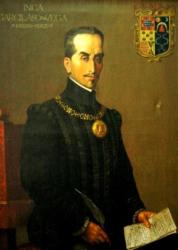
Johann Gustav Bernhard Droysen
 Germany
Early Life and Education
Johann Gustav Droysen was born on July 5, 1808, in Treptow, Pomerania. His father, a garrison preacher, instilled in him a deep sense of German patriotism. Droysen witnessed the transformative events of the Napoleonic Wars and the subsequent resurgence of Prussia. The family's financial hardship after his father's premature death forced him to rely on scholarships and tutor jobs to complete his education.
Academic Career
Droysen enrolled at the University of Berlin, where he excelled in Greek studies. His fascination with classical Greece led him to translate Aeschylus (1831) and Aristophanes (1836-1838). In his groundbreaking work, "History of Alexander the Great" (1833), he introduced the term "Hellenism" to describe the fusion of Greek and Eastern cultures following Alexander's conquests.
Droysen's influence extended beyond the academy. He taught at the Berlin Gymnasium and later became a professor at the University of Berlin. His 14-volume "History of Prussian Policy" (1855-1886) provided a detailed account of Prussia's rise to prominence.
Political Engagement
Droysen's scholarly pursuits were intertwined with his political activism. He supported the national liberation movement in Schleswig-Holstein (1844) and served as a member of the Frankfurt Parliament during the 1848-1849 revolutions. He advocated for German unification, aligning himself with the pro-Prussian "Little Germany" faction.
Historiography
Droysen's enduring legacy lies in his contributions to historical methodology. In his "Outline of Historics" (1868), he emphasized the importance of "understanding" (Verstehen) in historical research. Drawing upon the ideas of Wilhelm von Humboldt and Friedrich Schleiermacher, he argued that historians should strive to comprehend the unique perspective of each historical period.
Droysen's emphasis on national history and the role of Prussia in German unification influenced subsequent generations of German historians. His work remains a testament to the enduring relevance of historical scholarship in shaping national identity and political discourse.