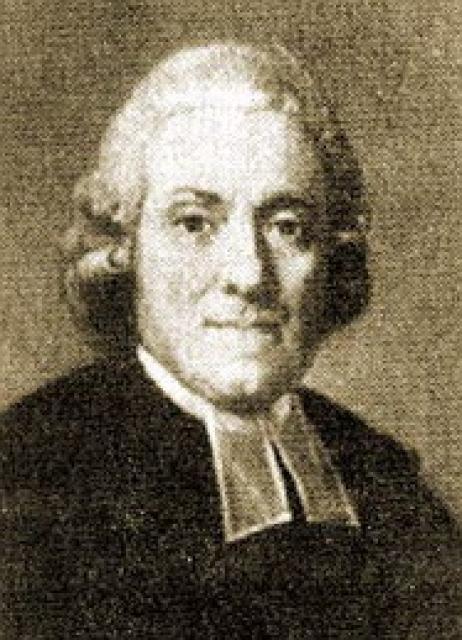
Johann Peter Zusmilch
 Germany
- Johann Peter Süssmilch: A Pioneer of Statistics and Social Reform
- Transition to Religious Life
- Pastoral and Scholarly Career
- Contributions to Statistical Research
- Social and Political Involvement
- Historical and Literary Work
- Legacy
Johann Peter Süssmilch: A Pioneer of Statistics and Social Reform
Early Life and EducationJohann Peter Süssmilch was born in Berlin, the son of a saddler. He received his primary education in Neuruppin and later attended the Gymnasium zum Grauen Kloster in Berlin. In 1727, he studied medicine at the Collegium Medico-Chirurgicum in Halle and then pursued jurisprudence, medicine, and theology at the University of Jena, where he also worked as a tutor.
Transition to Religious Life
After earning his degree, Süssmilch moved to Berlin in 1732 with the intention of returning to Jena to teach at the university. However, his plans were thwarted by his parents' disapproval. He served as a tutor in the family of Field Marshal Kalkreuth. In 1735, Kalkreuth offered Süssmilch the position of chaplain in his regiment, and he participated in the first campaign of the War of the Austrian Succession.
Pastoral and Scholarly Career
In 1741, Süssmilch became a parish pastor in Etzion and Knoblauch. In 1742, he became senior pastor (Propst) of the Cologne district in Berlin, pastor of the St. Peter's congregation, and a consistory councilor. From 1750 onward, he served as senior consistory councilor in Berlin. He was also a member of the Poor Directors' Board and a censor of theological writings (from 1749).
Contributions to Statistical Research
Süssmilch's most notable contribution was his groundbreaking work in statistics. Influenced by the writings of English statisticians, he analyzed statistical data collected from church records in the Prussian state. Unlike his contemporaries who focused on descriptive statistics, Süssmilch used mathematical methods to establish patterns in population movements. His magnum opus, "The Divine Order in the Changes in the Human Race" (1742), presented a comprehensive analysis of demographic trends.
Social and Political Involvement
Süssmilch's statistical research led him to advocate for social reforms. He denounced luxury, poverty, war, and poor governance as factors that disrupted the divine order he believed governed human populations. He supported the liberation of serfs, the abolition of feudal labor, and various economic improvements. His writings influenced social and economic policies in Prussia and beyond.
Historical and Literary Work
In addition to his statistical work, Süssmilch published sermons that addressed contemporary political issues, such as the conclusion of peace with Russia. He also wrote on history, architecture, urban planning, and linguistics. His memoirs recount his experiences as a participant and eyewitness in the Battle of Mollwitz in Silesia in 1741 and the first Russian occupation of Berlin in 1760.
Legacy
Süssmilch's pioneering work in statistics and social reform earned him recognition as one of the founders of modern social science. He is credited with establishing the scientific and mathematical basis of statistics, which became the foundation for later advances in the field by Adolphe Quetelet and others. His social and political ideas also played a role in the development of welfare policies and the pursuit of social justice.


