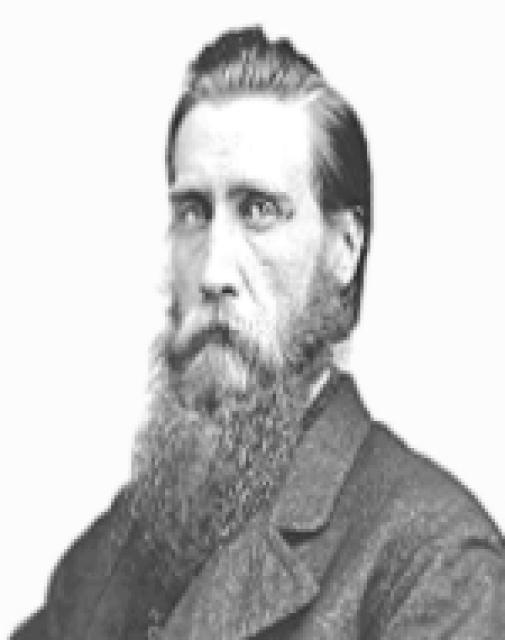
John Bell Hood
 USA
USABiography of John Bell Hood
John Bell Hood was born in 1831 in Kentucky. In 1853, he graduated from West Point and began his military career. However, on April 16, 1861, Hood left the Union Army and swore allegiance to the Confederacy. From October onwards, he commanded the Texas Brigade of Whiting's Division, which later became the 2nd Texas Corps of the Army of Northern Virginia.
Despite not being of Texan descent, Hood was able to earn the respect and obedience of these unruly soldiers. Throughout the war, General Hood commanded several military units in the Army of Northern Virginia, but it was his association with the Texas "boys" that was attributed to all his successes and exploits.
Hood was known for his recklessness and often spoke without restraint. During the beginning of Robert E. Lee's Maryland Campaign, he got into a heated argument with General Nathan Evans. As a result, Hood was relieved of his command and placed under arrest. However, when the time came for Hood's Texas Division to join the battle in the South, the soldiers refused to fight without their commander. Lee had to "conditionally" release Hood, postponing his punishment for a more peaceful time. It is worth noting that Hood's heroism and the bravery displayed by his troops in the Battle of Antietam redeemed his guilt, and Lee never returned to the question of his deferred punishment.
Hood frequently suffered from his impulsive nature, often engaging in unnecessary fights. As a result, he was wounded in the arm at the Battle of Gettysburg, which left his arm immobile. Two months later, in the Battle of Chickamauga, he lost his leg. However, these severe wounds only enhanced Hood's popularity among the army and the Southern population.
In July 1864, John Hood replaced Joseph Johnston as the commander of the Army of Tennessee and participated in the struggle for Atlanta, repelling the advances of William Sherman. The circumstances demanded decisive action from the new commander, and for a little over a week, Hood attempted three attacks against Sherman, hoping to crush the northern forces. However, all three attacks were successfully repelled by Sherman. The talented commander of brigades and corps showed his complete incapacity as an army commander. The Battle of Atlanta became the only instance during the war where one army, the Army of Tennessee, was effectively destroyed on the battlefield.
After the war, Hood settled in New Orleans and became a prosperous businessman until the financial crisis of 1878. In the following year, he passed away during an epidemic.


