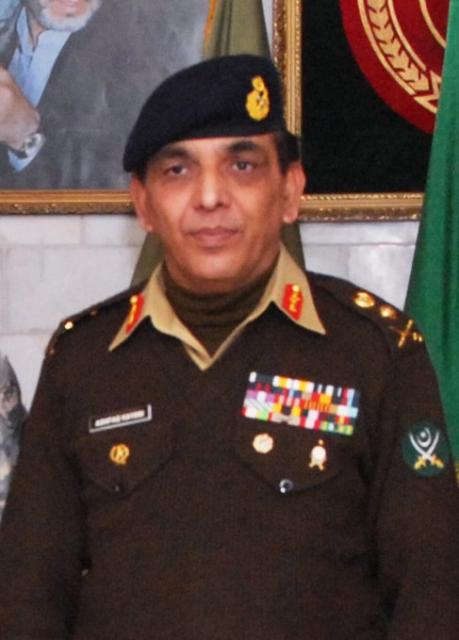
Ashfaq Parvez Kayani
 Pakistan
- Ashfaq Parvez Kayani: A Visionary Military Leader
- Rise through the Ranks
- Confrontation with India and the Role of Kayani
- Investigation of Musharraf Assassination Attempt
- Head of Inter-Services Intelligence
- Political Engagements and Counter-Terrorism
- Legacy
Ashfaq Parvez Kayani: A Visionary Military Leader
Early Life and Military CareerAshfaq Parvez Kayani, born in April 1952 in Jhelum, Pakistan, hails from a prominent military lineage. After completing his education at the local Cadet Corps, Kayani joined the Pakistan Military Academy in Kakul. Following his graduation in August 1971, he commenced his military service in the Baloch Regiment, participating in the third Indo-Pakistani war.
Rise through the Ranks
Kayani's military career ascended rapidly, culminating in his appointment as the first post-independence-born Chief of Army Staff (COAS) of Pakistan. He served as Deputy Military Secretary in Benazir Bhutto's government in 1988. His later postings included Commandant of the Command and Staff College in Quetta and attendance at the prestigious US Army Command and General Staff College at Fort Leavenworth.
Confrontation with India and the Role of Kayani
Kayani's pivotal role emerged during the 2001-2002 military standoff with India. As Director-General of Military Operations (DGMO), he meticulously managed troop movements and maintained dialogue with the Indian counterpart, successfully averting the escalation into a full-fledged war.
Investigation of Musharraf Assassination Attempt
Kayani's acumen and integrity were recognized by President Pervez Musharraf, who entrusted him with the investigation of the December 2003 assassination attempt on his life. The probe led to the conviction of 11 individuals in a military court.
Head of Inter-Services Intelligence
In 2004, Kayani was appointed Director-General of the Inter-Services Intelligence (ISI). During the political turmoil of 2007, he maintained neutrality, becoming the first ISI chief to also serve as COAS.
Political Engagements and Counter-Terrorism
After Musharraf's resignation, Kayani facilitated the transition between Nawaz Sharif and Asif Ali Zardari. As COAS, he spearheaded a comprehensive strategy against the Taliban, restoring public confidence in the armed forces.
Legacy
Kayani's tenure as COAS was marked by his exceptional leadership, strategic vision, and commitment to Pakistan's security and sovereignty. He retired in November 2013, leaving behind a legacy of a strong and respected military that remains steadfast in its defense of the nation.




