John Blenkinsop
 Great Britain
- Biography of John Blenkinsop
- Early Life and Education
- Work as an Agent
- Development of Steam Locomotives
- Invention of the Rack Railway
- Successful Implementation of Steam Locomotives
- Later Career
Biography of John Blenkinsop
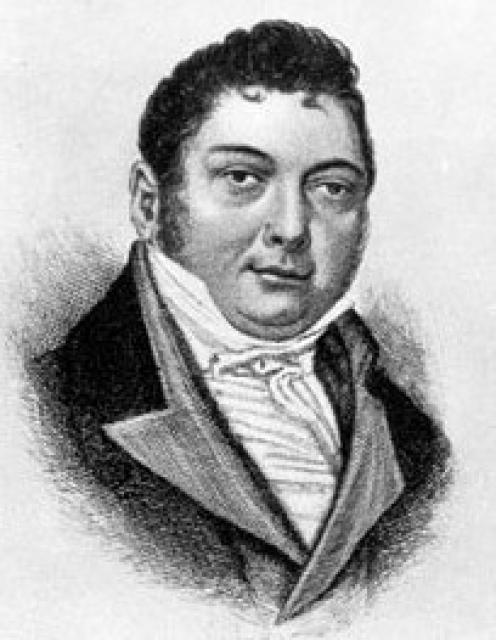
John Blenkinsop, an English mining engineer and inventor of locomotives, created the first successful practical railway locomotive project.
Early Life and Education
John Blenkinsop was born in 1783 in Felling, County Durham, and was the son of a stonemason. He became an apprentice to his cousin Thomas Barnes, a mining engineer who studied the coal deposits in Northumberland.
Work as an Agent
From 1808, John worked as an agent for Charles John Brandling, the owner of coal mines in his estate near Leeds called Middleton. In 1758, Brandling's workers built a horse-drawn road (now known as the Middleton Railway) to transport coal to Leeds. Some parts of the route were not owned by Brandling, leading to the passing of a parliamentary law that required payments for the right of passage.
Development of Steam Locomotives
In the early 19th century, there were attempts to utilize steam power for transportation needs. Richard Trevithick experimented with various steam locomotive models, and in 1805, he successfully built a steam locomotive for the Wylam Colliery company. However, the wooden rails with cast iron plates could not withstand the weight of the locomotive. Efforts to improve the pulling power of locomotives continued, driven partly by the shortage of horses and fodder caused by the Napoleonic Wars. Around 1799, more durable iron rails were installed on the Middleton Railway.
Invention of the Rack Railway
In 1811, Blenkinsop patented his system of racks and pinions for locomotives, known as the rack railway, which was later implemented by Matthew Murray of the Fenton, Murray and Wood company in Holbeck. At the time, it was believed that a locomotive could pull a load four times its weight, but Blenkinsop wanted to demonstrate that steam engines were capable of more. His locomotive, weighing 5 tons, was designed to carry a useful load of 90 tons. By reducing the weight to 20 tons, Blenkinsop's "horse" could reach speeds of up to 16 km/h, an unprecedented feat at that time.
Successful Implementation of Steam Locomotives
The first locomotive put into operation was likely the "Salamanca," built in 1812. Three others were placed on the tracks later that same year, with another in 1813, and one more in 1815. One of them was named "Lord Wellington." Robert Daglish, licensed by Blenkinsop, constructed other locomotives for the coal mines in Orrell. At least one more locomotive was made by Matthew Murray for the Kenton and Coxlodge Collieries railway in Newcastle-upon-Tyne. Two more locomotives based on Blenkinsop's design were produced at the Royal Iron Foundry in Berlin. Although both models passed factory tests successfully, they were not suitable for practical use. Murray's Blenkinsop locomotives featured the first double-acting cylinders, which significantly differed from Richard Trevithick's designs. This allowed for the elimination of heavy flywheels. The displacement of both crankshafts was set at 90 degrees to overcome dead points and increase efficiency. However, the strong jolts and metallic noise from the rack coupling remained unresolved.
Later Career
In addition to his managerial role at the Middleton Collieries company, Blenkinsop served as an engineering consultant for Sir John Lister Kaye in the 1820s. He also provided services to various developers of coal deposits. John Blenkinsop passed away on January 22, 1831, in Leeds.