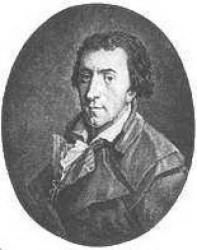
John Brown
 USA
USA- John Brown: Abolitionist and Radical Revolutionary
- Education and Family Business
- Personal Struggles and Tragedy
- Involvement in the Underground Railroad
- Financial and Legal Troubles
- Abolitionist Militancy
- Harper's Ferry Raid
- Legacy and Impact
John Brown: Abolitionist and Radical Revolutionary
Early Life and FamilyJohn Brown was born on May 9th in Torrington, Connecticut, the second son of Owen Brown and Ruth Mills. In his youth, he was sent as a cattle driver in place of his father.
Education and Family Business
Brown moved to Ohio with his family in 1805 and attended schools in Massachusetts and Connecticut, aspiring to become a Congregationalist minister. However, he abandoned his studies due to financial constraints and eye inflammation. He returned to Ohio and established a successful leathermaking business with his brother.
Personal Struggles and Tragedy
In 1820, Brown married Diantha Lusk. They had nine children, of whom two died young. His business ventures faltered, and he became a mail carrier. In 1832, his wife Diantha died of brain inflammation.
Involvement in the Underground Railroad
Brown's home became a sanctuary for runaway slaves following the Nat Turner Rebellion. He actively supported their escape and became a prominent abolitionist. In 1833, he married Mary Ann Day, and they had thirteen children together.
Financial and Legal Troubles
Brown moved to Ohio in 1836 and purchased land. He faced financial losses due to the economic crisis of 1837. In 1842, he was declared bankrupt. He continued to struggle with debt and the loss of four children to dysentery in 1843.
Abolitionist Militancy
Brown emerged as a prominent abolitionist advocating for armed resistance against slavery. He led a volunteer force in Kansas, participating in battles against pro-slavery forces. In 1856, he executed five pro-slavery settlers at Potawatomi Creek, Kansas.
Harper's Ferry Raid
Brown's most famous act was his raid on the federal arsenal at Harper's Ferry in 1859. He seized the facility with a group of followers, intending to ignite a slave rebellion. The raid was unsuccessful, and Brown was captured and executed.
Legacy and Impact
Brown's execution became a galvanizing event in the lead-up to the American Civil War. His legacy as a radical abolitionist who employed violent tactics continues to inspire debate today. The song "John Brown's Body" became a popular anthem of the Union during the Civil War.