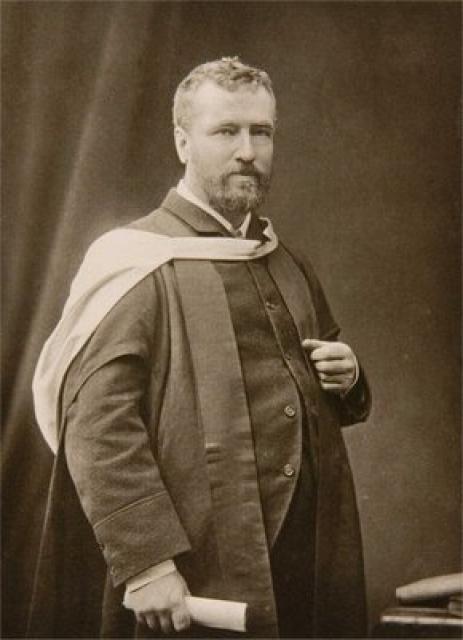
John Cleland
 Great Britain
- Childhood and Background
- Fanny Hill and the Scandal
- A Writer Beyond the Famous Novel
- Later Years and Legacy
John Cleland’s name is inseparable from Fanny Hill, the audacious fictional memoir that scandalized eighteenth-century Britain and became one of the most debated books in the history of literary censorship. Yet the man behind the notorious title was more than a provocateur: he was a restless writer whose career ranged from colonial service in India to novels, theatre, journalism, and speculative studies of language.
Childhood and Background
Cleland was born in Great Britain into a family connected to military and public service. His father, William Cleland, was an army officer and civil servant, and his mother, Lucy, moved in fashionable social circles. Biographical records differ over his birth year: it is commonly given as 1709, while the Oxford Dictionary of National Biography records his baptism in Kingston upon Thames on September 24, 1710. He briefly attended Westminster School before leaving in his early teens.
In 1728, Cleland entered the service of the East India Company and spent more than a decade in Bombay, advancing from a low-ranking military position into civil administration. He returned to London in 1741 after being recalled because of his father’s illness. The years that followed were financially uncertain, and he eventually found himself in debtors’ prison.
Fanny Hill and the Scandal
It was in prison that Cleland wrote the work that would define his reputation. First published anonymously in two parts in 1748 and 1749 as Memoirs of a Woman of Pleasure, the novel follows the adventures of Fanny Hill through her own lively, retrospective narration. Its sexual candor was startling, but Cleland’s elaborate euphemisms and playful prose also made the book a literary performance, not merely a catalogue of transgression.
The book’s publication brought legal trouble. Cleland and publisher Ralph Griffiths were arrested, and Cleland was briefly jailed. He pleaded poverty, and the authorities released him after he agreed to revise the text. The shortened, softened edition did little to erase the original’s notoriety; unauthorized copies continued to circulate, while the book’s blend of scandal and literary craft drew readers and critics alike.
A Writer Beyond the Famous Novel
Cleland kept writing after Fanny Hill, though none of his later works matched its fame. His 1751 novel Memoirs of a Coxcomb offered a male counterpart to the earlier book’s memoir form. He also wrote plays, newspaper pieces, and works on language and history, including an ambitious, now-discredited attempt to trace European languages to an ancient Celtic source. The breadth of these projects shows a writer continually testing new subjects, even as the public and booksellers repeatedly sold him under the shadow of his most infamous creation.
Later Years and Legacy
Cleland died in London on January 23, 1789. Fanny Hill, meanwhile, continued to travel through clandestine editions and censorship disputes long after its author’s death. Its later legal battles, including a landmark 1966 United States Supreme Court decision protecting the book from an obscenity ban, made it a recurring touchstone in debates over literature, sexual expression, and state censorship. The work’s persistent afterlife has often overshadowed Cleland himself, but its inventive first-person voice and place in the history of the novel keep his name in literary discussion.