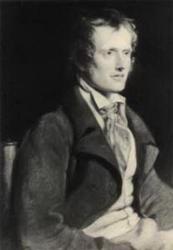
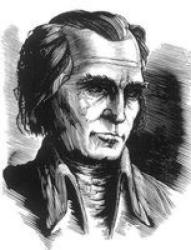
John Donne
 Great Britain
- John Donne: A Man of Letters and Faith
- Early Travels and Legal Career
- Literary Success and Romantic Entanglements
- Poverty and Religious Studies
- Patronage and Religious Vocation
- Literary and Theological Works
- Eccliastical Career and Literary Legacy
John Donne: A Man of Letters and Faith
Early Years and EducationJohn Donne was born in London between January 23 and June 19, 1572. His father, a prosperous merchant, passed away when John was a mere child. His mother, the daughter of poet and playwright John Heywood, descended from Sir Thomas More.
At the tender age of twelve, Donne enrolled at Hart Hall, Oxford University. After three years, he transferred to Cambridge University, but did not complete a degree at either institution. His early entry and subsequent refusal to formally graduate stem from his Catholic faith, as he was unwilling to take the Oath of Supremacy required for a degree.
Early Travels and Legal Career
Upon leaving university, Donne embarked on travels to Italy and Spain. However, little is known about his life until 1591, when he joined the legal corporation of Thavies Inn. A year later, he transferred to Lincoln's Inn and remained there for approximately three years.
In 1596-1597, Donne participated as a "gentleman adventurer" in popular Earl of Essex's military expeditions against Cádiz and the Azores.
Literary Success and Romantic Entanglements
Donne returned to London and enjoyed a successful career, becoming a Member of Parliament in 1601. Despite not publishing any of his verses, he gained renown as a poet, impressing readers with his prose work "Paradoxes and Problems" and his revival of classical forms such as epigram, love elegy, and the verse epistle.
In January 1602, Donne secretly married 17-year-old Ann More. Her father's disapproval led to Donne's imprisonment in Fleet Prison and the loss of his post in the Lord Keeper's household.
Poverty and Religious Studies
Upon his release from prison, Donne found himself unemployed and destitute. He began an intensive study of canon law, theology, and church history, assisting Thomas Morton in writing anti-Catholic polemical tracts from 1605 to 1607. Morton promised Donne a benefice if he took holy orders, but Donne still harbored hopes for a secular career.
Patronage and Religious Vocation
Donne sought various secretarial and ambassadorship positions without success. During this time, he composed many of his famous love poems, religious verse, and witty complimentary epistles.
In 1610, Donne published his first work, "Pseudo-Martyr," dedicated to King James I and defending the Oath of Allegiance. He received an honorary Master of Arts degree from Oxford and royal patronage, with the promise of ecclesiastical preferment if he entered the priesthood.
In 1611, Donne found a patron in Sir Robert Drury. He traveled abroad with Drury for nearly a year and settled his family in Drury Lane upon his return in 1612.
Literary and Theological Works
Between 1611 and 1615, Donne composed his "Essays in Divinity," indicating his preparation for religious service. On January 23, 1615, he was ordained a deacon and priest. King James appointed him a royal chaplain and arranged for Cambridge University to award him a Doctor of Divinity degree.
Eccliastical Career and Literary Legacy
In 1616, Donne was appointed to the prestigious position of lecturer in divinity at Lincoln's Inn. In 1621, he became Dean of St. Paul's Cathedral. During his ecclesiastical service, his poetic output dwindled, but he published his powerful and psychologically profound "Devotions Upon Emergent Occasions" in 1624, recounting a near-fatal illness in 1623.
Donne bequeathed over 160 sermons to his son, who posthumously published them in three volumes. His sermons, characterized by their eloquence and vivid imagery, showcased his literary brilliance alongside his religious zeal.
John Donne passed away in London on March 31, 1631, leaving behind a legacy as one of England's greatest masters of prose and poetry.