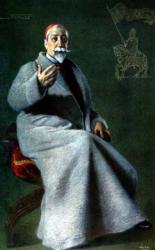
John Dos Passos
 USA
USA- John Dos Passos: A Portrait of a Literary Icon
- Early Life and Education
- Military Service and European Experience
- Literary Beginnings and "Lost Generation" Novels
- Formalist Experimentation and the "Manhattan Transfer"
- "USA" Trilogy: A Panoramic Portrait of American Culture
- "District of Columbia" Trilogy and the "Camera Eye" Technique
- Legacy and Influence
John Dos Passos: A Portrait of a Literary Icon
John Dos Passos, a Portuguese-American writer, left an indelible mark on the literary landscape of the 20th century.
Early Life and Education
Born into a wealthy family in Chicago, Dos Passos embarked on an exceptional educational journey. After graduating from an elite school in Connecticut, he ventured abroad in 1907 with a tutor to immerse himself in classical art, literature, and architecture. He spent six months exploring France, England, Italy, Greece, and the Middle East. In 1913, he matriculated at Harvard University, where he studied until 1916.
Military Service and European Experience
In July 1917, Dos Passos volunteered as a driver for an ambulance unit in Paris and Northern Italy. In 1918, he was drafted into the U.S. Army and deployed to Paris. While in the military, he was permitted to attend anthropology courses at the Sorbonne.
Literary Beginnings and "Lost Generation" Novels
Dos Passos's early novels, "One Man's Initiation: 1917" (1920) and "Three Soldiers" (1921), belong to the literature of the "Lost Generation," reflecting the disillusionment and alienation of the post-World War I era.
Formalist Experimentation and the "Manhattan Transfer"
With "Manhattan Transfer" (1925), Dos Passos pioneered a formalist experimentation that would characterize his later works. This novel depicts the urban landscape of New York City in a fragmented and kaleidoscopic style.
"USA" Trilogy: A Panoramic Portrait of American Culture
In his "USA" trilogy, comprising "The 42nd Parallel" (1930), "Nineteen Nineteen" (1932), and "The Big Money" (1936), Dos Passos painted a vivid and panoramic portrait of American culture in the early decades of the 20th century.
"District of Columbia" Trilogy and the "Camera Eye" Technique
The "District of Columbia" trilogy, including "Adventures of a Young Man" (1939), "Number One" (1943), and "The Grand Design" (1949), continued Dos Passos's critical examination of American society. He employed his signature "camera eye" technique, a fragmented and subjective perspective that captures the essence of urban life.
Legacy and Influence
John Dos Passos's innovative narrative style and incisive social commentary have left a lasting legacy in American literature. His novels continue to be read and studied as seminal works that explore the complexities of the modern world. His influence can be seen in the works of subsequent generations of writers, such as Norman Mailer and Jack Kerouac.