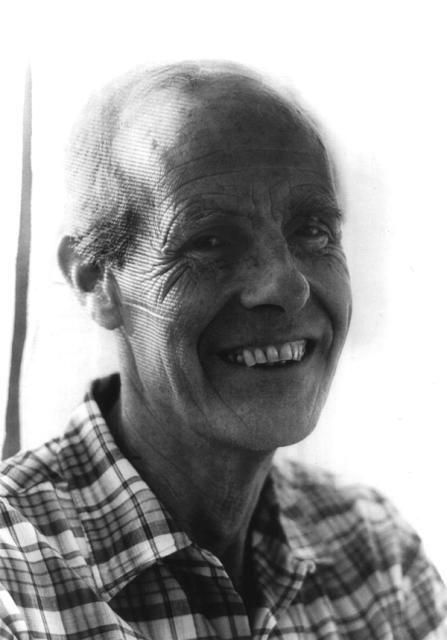
John Emerson
 USA
USABiography of John Emerson
John Emerson, an American inventor, specialized in respiratory equipment and created several biomedical devices. One of his most well-known works is the improved iron lung, an artificial respiration device. Emerson was born on February 5, 1906, in New York City. At the age of 22, he acquired a dormant mechanical workshop from a local inventor. He then transported the equipment to a small warehouse in Harvard Square, where he built a research facility for professors and researchers from medical schools in the Boston area.
Inventions and Contributions
In 1928, Emerson developed the Barcroft-Warburg apparatus for studying tissue respiration. In 1930, he designed a new model of the micromanipulator, which proved valuable in early physiological research methods and later found application in electronic component assembly. In 1931, John created an oxygen tent with an improved cooling system. His father, who was then the Health Commissioner of New York, suggested that John work on creating a more advanced artificial ventilation device when a poliomyelitis epidemic broke out. Starting in the early 1930s, John embarked on the project, basing it on Philip Drinker's apparatus. The improvements were completed by July 1931. Emerson's model was quieter, lighter, more efficient, and less expensive. The new iron lung cost around $1,000, which was half the price of Drinker's. Initially, Drinker threatened to sue Emerson's company. He then proceeded with legal action, but the consequences proved unfortunate for himself as Drinker not only lost the lawsuit but also had his patents declared invalid.
In the new artificial respiration device, John replaced the air flow generator and valves with a flexible diaphragm consisting of two layers. He achieved fail-safety, as if the first layer broke, the second one would continue to work. The improvements also extended to the chamber where the patient was placed. The very first unit of the apparatus, named "Old Number One," is currently on display at the Smithsonian Institution in Washington, DC. Continuing to refine the iron lung, Emerson added manual control, quick chamber opening and closing functions, and a highly accurate manometer. The final touch was the addition of a transparent dome for oxygen therapy to provide continuous positive pressure. This allowed the lungs to be oxygenated even when the chamber was open for patient care.
At the suggestion of Dr. Alvin Barach, John further improved the Thunberg box respirator in the 1940s. Emerson also participated in the development of breathing valves for high-altitude flights and underwater equipment for the Navy shortly before World War II. In 1942, he created an automatic device for cardiopulmonary resuscitation. In 1949, he worked with the anesthesia department at Harvard. In 1955, Emerson built the Emerson Postop Pump, a suction pump for draining fluid from the pleural cavity, for postoperative cases in thoracic surgery. This pump is widely used to this day. In the late 20th century, John assisted Dr. Barach in developing a device for removing secreted substances in patients with neuromuscular diseases.
Family Connections
John Emerson was related to poet Ralph Waldo Emerson and illustrator Maxfield Parrish.


