Lao She
 China
ChinaBiography of Lao She
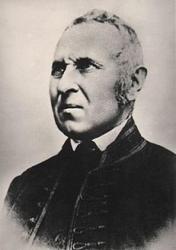
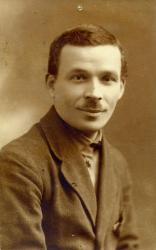
Lao She, a prominent Chinese novelist, playwright, and journalist, is known for his realistic and satirical prose, making him one of the leading masters of Chinese literature. He was of Manchu descent and grew up in a poor family. At a young age, he lost his father during the suppression of the Boxer Rebellion. Lao She attended a private school where he studied traditional Confucian texts before transferring to a public elementary school.
After completing his education, Lao She became the director of a primary school in Beijing. He also taught language and literature at a high school affiliated with Nankai University in Tianjin. In 1919, after the "May Fourth Movement" literary revolution, he published his first short story in a student journal. In 1924, Lao She went to England to teach Chinese literature, first in London and then at Oxford University.
In 1926, Lao She published his first novel, "Rickshaw Boy," in the literary journal "Xiaoshuo Yuebao" (Monthly Prose). He continued to write and publish novels, including "Mr. Ma and Son" in 1929. In 1929, Lao She returned to China, making stops in Paris and Singapore along the way. In Singapore, he taught at a school for Chinese settlers. During this time, he wrote the short story "The Birthday of Xiao Po," which was his last published work in "Xiaoshuo Yuebao." Lao She settled in Beijing, later renamed Beiping, and then in the cities of Jinan and Qingdao.
In Jinan, Lao She wrote a novel called "Daminhu," which was never published. Unfortunately, the manuscript was destroyed in 1932 when a Japanese bomb hit the printing press. In 1933, his novels "Divorce" and "Cat Country" were published, followed by "The Yellow Storm" in 1934 and "Camel Xiangzi" in 1936.
After the Japanese invasion of China in 1937, Lao She wrote a series of articles urging people to unite against the enemy. He moved to Wuhan, where he organized the publication of the magazines "Kandao Di" (Resist to the End) and "Zhenzhen Kan" (Reading for All) with a group of like-minded individuals. In March 1938, in Chongqing, the temporary capital of China, Lao She played a leading role in coordinating the "All-China Association of Literature and Art Workers for Resistance against the Enemy."
During the war, Lao She created the play "Zhang Zizhong" and the novel "The Burning of the Red Lotus Temple." His most significant work, "Four Generations of a Family," took nearly five years to complete, starting in China and continuing in the United States, where he went to give lectures. In the United States, the novel was published in an abridged version titled "The Yellow Storm." He also wrote the novel "The Drum Singers" during his time in New York.
On October 13, 1949, just 13 days after the establishment of the People's Republic of China, Lao She returned to China from San Francisco. Over the next sixteen years, he wrote numerous plays, essays, and a novel titled "Under the Purple Banners," which remained unfinished.
In the summer of 1966, Lao She was hospitalized, and upon his release, he found himself in the midst of the "Cultural Revolution" in Beijing. On August 23, he went to work and reportedly defended his colleagues who had become victims of the Red Guards. As a result, he was severely beaten and declared a "counter-revolutionary" to save his life. Late in the evening, Lao She returned home, but his body was found on the outskirts of the city in Lake Taipinghu the following day. He was wearing only undergarments, and his outer clothing was found on the shore. Pieces of paper were floating in the water, which were immediately confiscated by the police, preventing his family from seeing them. While it is generally believed that Lao She took his own life, some still consider this claim to be debatable.