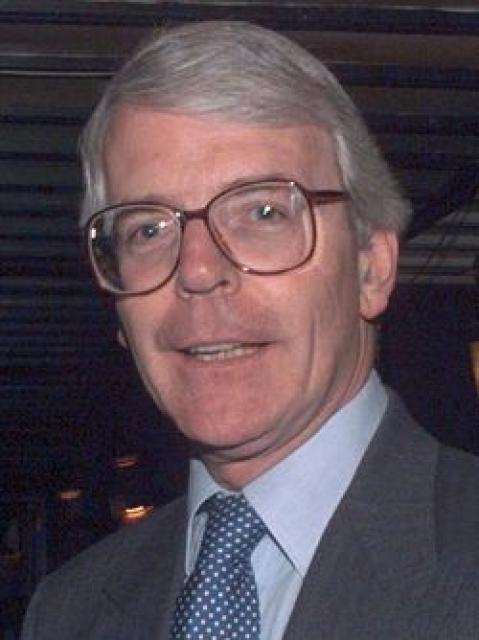
John Meydzhor
 Great Britain
Biography of John Major
John Major is a British politician who served as the Prime Minister of the United Kingdom from 1990 to 1997. He developed an interest in politics from a young age and began delivering speeches on an improvised platform at the Brixton market, following the advice of his friend Derek Stone, a member of the Conservative Party. At the age of 21, Major ran for the Lambeth Borough Council and unexpectedly won, becoming the Deputy Chairman of the Construction Committee. However, in 1971, despite switching to another district where the Conservatives were more popular, he lost the election and lost his seat on the council.
Major was an active member of the Conservative Party's youth wing and according to his biographer, Anthony Seldon, he attracted a significant number of young people in Brixton to join the party. Seldon also writes that Major was greatly influenced by Jean Kirens, who was 13 years older than him and became his teacher and later his lover. His relationship with Kirens prepared him for a political career and made him more ambitious and adept at presenting himself. Their relationship lasted from 1963 to 1968.
In the general elections of 1974, Major ran for the North St. Pancras Parliament, a traditionally strong Labour Party constituency, but was unsuccessful. In November 1976, he was selected as the Conservative candidate for Huntingdonshire, and in the subsequent general elections of 1979, he was elected to Parliament. He was re-elected from the same district in 1987, 1992, and 1997, winning by a record margin of votes in 1992. However, he did not participate in the 2001 elections.
Political Career
Major served as the Secretary of State for Parliament from 1981 and then as the Parliamentary Organizer of the Conservative Party from 1983. In 1985, he became the Deputy Minister for Social Affairs and Minister for the same department from 1986. In 1987, he was appointed as the Deputy Minister of Finance and unexpectedly became the Minister of Foreign Affairs in 1989, despite lacking diplomatic experience. He held this position for only three months before transitioning to the role of Chancellor of the Exchequer. As Chancellor, he presented only one budget to Parliament in the spring of 1990.
In the autumn of 1990, the Conservative Party held a leadership election influenced by opposition against Margaret Thatcher. Thatcher lost in the first round and withdrew from the second. Major decided to participate in the election and won. On November 27, 1990, he was appointed Prime Minister.
Premiership
Major assumed office shortly before the Gulf War began and played a key role in the conflict. He persuaded President George H.W. Bush to declare Iraqi Kurdistan a no-fly zone, protecting the Kurds and Shiite Muslims from persecution by Saddam Hussein's regime. In the early years of Major's tenure, the global economy experienced a recession, which had already begun during Thatcher's leadership. As a result, the British economy also faced difficulties. It was expected that the Conservative Party, led by Major, would lose the 1992 general elections to the Labour Party led by Neil Kinnock. However, Major disagreed and conducted a "street" campaign, delivering speeches reminiscent of his earlier speeches in the Lambeth district. His charismatic campaign style contrasted with Kinnock's smoother campaign and gained the sympathy of voters. The Conservative Party won the elections, although with a slim majority of 21 seats, and Major became Prime Minister for the second time.
Just five months into his second term, Major faced a financial crisis known as "Black Wednesday." The crisis was caused by currency speculators, with George Soros being the most famous among them, who took advantage of inconsistencies in the European exchange rate mechanism (ERM) and caused a sharp decline in the value of the British pound. The British government was forced to devalue the pound and withdraw from the ERM. Major admitted that he was close to resigning during the crisis and even wrote a resignation letter to the Queen, although he never sent it. However, Norman Lamont, the Chancellor of the Exchequer (November 28, 1990 - May 27, 1993), stated that Major remained calm during those days. Nevertheless, Lamont criticized Major in his autobiography for his inability to make clear decisions and his refusal to withdraw the pound from the ERM at the early stages of the crisis. According to Lamont, billions of pounds were wasted on futile attempts to maintain the pound's value, even though it was already clear that it was unlikely to succeed. For 7 months after Black Wednesday, Major kept his government intact, but then, for political expediency, offered Lamont another government position (Minister for the Environment). Offended, Lamont resigned, and the influential Kenneth Clarke became the Chancellor of the Exchequer. The prolonged pause during the ongoing crisis was perceived as the Prime Minister's inability to make decisions, further damaging Major's popularity.
After the forced exit from the ERM, the British economy recovered at a rapid pace. This was aided by flexible economic policies, including a floating exchange rate and low refinancing rates. Additionally, the decline in the pound's value increased the attractiveness of British goods abroad, leading to a sharp increase in exports.