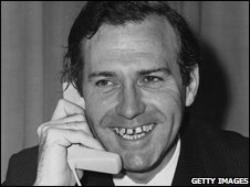
Gordon Brown
 Great Britain
- Gordon Brown: Prime Minister of the United Kingdom
- Early Political Career
- Parliamentary Representation and Shadow Cabinet Service
- Chancellor of the Exchequer
- Prime Minister of the United Kingdom
Gordon Brown: Prime Minister of the United Kingdom
Born into a Presbyterian minister's family, Gordon Brown received his early education at Kirkcaldy High School, where he participated in an experimental program that placed students according to their abilities. This accelerated program allowed him to enter the University of Edinburgh at the age of 16, where he graduated with honors in History in 1972. Brown earned his Master's degree (1972) and Doctorate in History (1982) from the same institution, with his doctoral work focusing on the history of the Labour Party and political reform in Scotland from 1918 to 1929.
Early Political Career
Brown's political activism began at a young age, with his involvement in the Labour Party starting at the age of 12. In 1972, while still a student, he was elected Rector of the University of Edinburgh, a position representing student interests, which he held until 1975. After graduating, Brown worked as a temporary lecturer at the university and later as a lecturer in politics at Glasgow College of Technology from 1976 to 1980.
Parliamentary Representation and Shadow Cabinet Service
Brown's foray into politics continued in 1983 when he was elected as the Member of Parliament for Dunfermline East. From 1983 to 1984, he served as the Chairman of the Labour Party in Scotland Council. Brown's "shadow cabinet" experience began in 1987 when he became Chief Secretary to the Treasury, followed by Minister of Trade and Industry (1989-1992) and Shadow Chancellor of the Exchequer (1992-1997).
Chancellor of the Exchequer
In May 1997, Brown was appointed Chancellor of the Exchequer in Tony Blair's Labour government. He held this position until June 2007, making him the longest-serving Chancellor since the 1820s. Brown's tenure is widely associated with the government's economic successes. Despite being a close associate of Blair, Brown was also seen as his primary rival within the party, with their main disagreement being over the United Kingdom's entry into the eurozone.
Prime Minister of the United Kingdom
On June 24, 2007, Brown was elected unopposed as leader of the Labour Party, succeeding Tony Blair. He was appointed Prime Minister of the United Kingdom by Queen Elizabeth II on June 27, 2007. Brown is known as a moderate Eurosceptic and belongs to the social democratic wing of the Labour Party, in contrast to Blair's social liberalism.