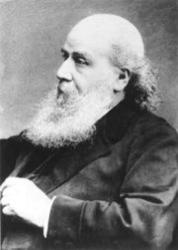
John Neumann
 USA
USA- John von Neumann: The Polymath's Polymath
- Early Life and Brilliant Mind
- Personality and Eccentricities
- Contribution to Computing
- The Von Neumann Architecture
- Controversies and Legacy
- Later Work and Awards
John von Neumann: The Polymath's Polymath
John von Neumann (1903-1957) was an American mathematician of Hungarian descent who made groundbreaking contributions to the development of the first computers.
Early Life and Brilliant Mind
Born into an affluent Budapest banking family, von Neumann displayed prodigious mathematical abilities from a young age. By age 6, he could converse in ancient Greek with his father, and by 8, he had mastered advanced mathematics. He excelled in his studies in Germany, where he contributed significantly to quantum mechanics and game theory.
Personality and Eccentricities
Von Neumann possessed an exceptional blend of intellectual brilliance and eccentric charm. He could perform complex calculations in his head at astonishing speed, and his lecture chalkboard would be filled with formulas that he would erase so quickly that colleagues joked about his "proof by erasure." His deep immersion in mathematics sometimes led to amusing episodes, such as when he would forget his destination while driving and need to call his office for clarification.
Contribution to Computing
Von Neumann's involvement in the Manhattan Project at Los Alamos sparked his interest in computers. He mathematically proved the feasibility of an implosion-type atomic bomb and later pondered the potential of hydrogen bombs, which required even more complex calculations. Recognizing the versatility of computers beyond mere computation, von Neumann envisioned them as universal tools for scientific research.
The Von Neumann Architecture
In 1954, von Neumann published his seminal work, "Preliminary Report on the EDVAC," which outlined his plans for a revolutionary machine. This report became the foundational document for the "von Neumann architecture," a design that remains the basis of modern computers. It introduced the key concept of storing programs in memory, allowing for greater flexibility and programming complexity.
Controversies and Legacy
Although von Neumann's report received widespread attention and recognition, it sparked controversy. J. Presper Eckert and John Mauchly, who had developed the ENIAC, felt their contributions were overlooked. Their resentment led to the dissolution of their partnership. Despite these debates, von Neumann's contributions to computing left an enduring legacy, inspiring generations of scientists and engineers.
Later Work and Awards
Von Neumann continued his work at the Institute for Advanced Study in Princeton and played a vital role in developing several advanced computers, including the MANIAC (Mathematical Analyzer, Numerator, Integrator, and Computer). As a member of the Atomic Energy Commission and the U.S. Air Force's Advisory Committee on Ballistic Missiles, he remained influential in nuclear and defense policy until his untimely death from a tumor at age 54.