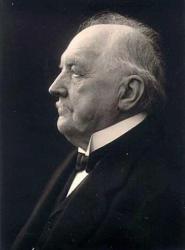
Oskar Zariskiy
 USA
USA- Early Life and Education
- Emigration to the United States
- Contribution to Mathematics
- Teaching Legacy
- Recognition and Legacy
- Later Years and Death
Early Life and Education
Oscar Zariski was born on April 24, 1899, to Betzalel Zaritsky and Hana Tennenbaum. He initially studied at the University of Kiev, but in 1920, amidst the Russian Civil War, he emigrated to Italy. There, he became a pupil of renowned Italian algebraic geometers Guido Castelnuovo, Federigo Enriques, and Francesco Severi.
Emigration to the United States
In 1927, upon the invitation of Solomon Lefschetz, Zariski emigrated to the United States. He joined Johns Hopkins University and later Harvard University, where he spent the majority of his academic career.
Contribution to Mathematics
Zariski's primary contributions were in algebra, particularly commutative algebra. He established a connection between commutative algebra and algebraic geometry, legitimizing the deductions made by his Italian mentors. His work in this area was complemented by the efforts of André Weil and Bartel van der Waerden.
Teaching Legacy
Zariski was also an exceptional educator. His book with Pierre Samuel, "Commutative Algebra," has become a classic and remains influential to this day. Among his notable students are Heisuke Hironaka, David Mumford, and Michael Artin.
Recognition and Legacy
In 1981, Zariski was awarded the Wolf Prize in Mathematics. He also formulated the influential Zariski conjecture regarding the properties of algebraic varieties.
Later Years and Death
Zariski retired from Harvard University in 1969. He continued his research as a visiting professor at the University of California, Berkeley and the University of Rome La Sapienza. He passed away on July 4, 1986, leaving behind a profound legacy in the field of mathematics.