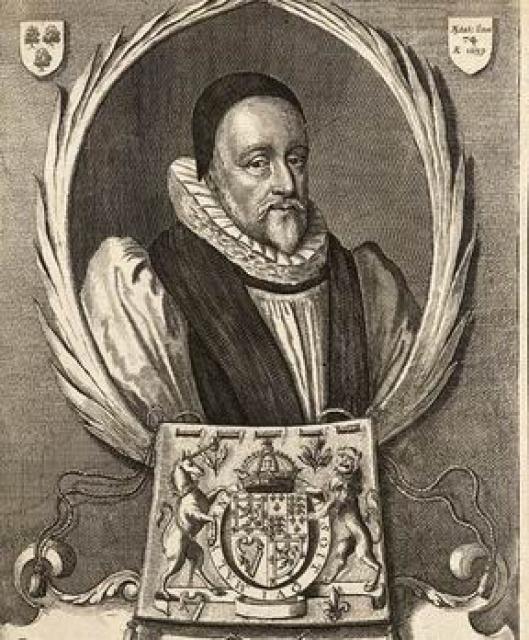
John Spottiswoode
 Great Britain
- John Spottiswoode: A Pillar of the Scottish Reformation
- Early Life and Education
- The Jacobean Compromise
- Chief Advisor and Archbishop
- Highland Affairs and the Atholl Raid
- The Reign of Charles I
- The National Covenant and Downfall
- Legacy
John Spottiswoode: A Pillar of the Scottish Reformation
John Spottiswoode, born into a family of Protestant ministers, played a pivotal role in shaping the religious landscape of Scotland in the early 17th century.
Early Life and Education
Educated at the University of Glasgow under the tutelage of Andrew Melville, the father of Presbyterianism, Spottiswoode became the minister of Calder parish, previously held by his father. His unwavering support for the ultra-Protestant party gradually shifted towards a more conciliatory stance, earning him the trust of courtiers and King James VI.
The Jacobean Compromise
Upon James's accession to the English throne in 1603, Spottiswoode was appointed Archbishop of Glasgow. James's reforms sought a balance between royal authority and the Protestant clergy, preserving Presbyterian principles while strengthening the monarchy's influence over ecclesiastical appointments and finances. Spottiswoode became a leading advocate of this "Jacobean compromise."
Chief Advisor and Archbishop
Spottiswoode's profound understanding of the Scottish clergy made him an indispensable advisor to King James VI. As a member of the Privy Council and later Archbishop of St. Andrews (1615), he advocated for the restoration of episcopal authority while counseling moderation against radical changes. His opposition to the "Five Articles of Perth" in 1617 averted widespread unrest.
Highland Affairs and the Atholl Raid
Beyond ecclesiastical matters, Spottiswoode actively engaged in the issue of Highland clans. He convinced James VI to recognize their socio-political authority and hold clan leaders accountable for maintaining order. This stance put him at odds with the Earl of Argyll, who sought to expand his influence over smaller clans.
The Reign of Charles I
Spottiswoode's influence grew under Charles I, who granted him the title of Lord Chancellor in 1635, making him the first cleric to hold the office since the Reformation. Charles's attempts to assert royal prerogatives in the Scottish church and appoint bishops to state positions sparked tensions.
The National Covenant and Downfall
In 1637, an uprising in Edinburgh against the monarchy and bishops escalated into a national revolt. Spottiswoode attempted to mitigate the crisis by softening the National Covenant of 1638, but it proved futile. Forced to flee Scotland, he witnessed the collapse of his lifelong efforts in December 1639, when he died in exile in London.
Legacy
John Spottiswoode's "History of the Church and State of Scotland," published posthumously in 1655, remains a valuable work of historical scholarship, known for its literary style, accuracy, and comprehensive coverage. As a prominent figure in the Scottish Reformation, he left an enduring mark on the religious and political landscape of his time.