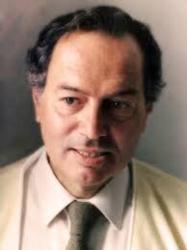
John Tavener
 Great Britain
Biography of John Tavener
John Tavener was a contemporary English composer who gained fame for his works such as 'The Whale,' a dramatic cantata based on a biblical story; 'The Protecting Veil,' written about the Virgin Mary; and 'Song for Athene,' a popular elegy with lyrics by the nun Thekla (Mother Thekla).

Early Life and Career
John Tavener was born on January 28, 1944, in Wembley, London, United Kingdom. He is said to be a descendant of the legendary English composer John Taverner. His parents owned a construction company, and his father played the organ in his free time. This early exposure to music sparked Tavener's interest in the art form. He attended Highgate School and later the Royal Academy of Music, where he began his professional career as a composer.
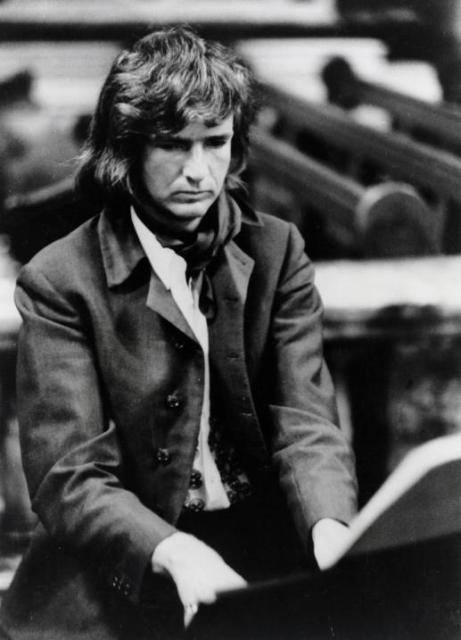
Tavener's debut piece, 'The Whale,' based on the biblical legend of Jonah, premiered in 1968 and instantly garnered worldwide attention. Music critics praised his undeniable talent, which was just beginning to reveal itself.
During this time, Tavener's brother happened to mention his talented sibling to Ringo Starr from the band 'The Beatles.' This coincidence led to a professional recording at Apple Records and the release of a solo album in 1970. Around the same time, Tavener started teaching music at the internationally renowned Trinity College of Music.
A Shift in Spirituality and Musical Style
During this period, Tavener went through a short-lived marriage and a change in religious beliefs. He converted to Russian Orthodoxy, which profoundly influenced his music. The newfound spirituality gave him an inner freedom he had never experienced before. Tavener realized that Orthodoxy had the greatest impact on his art and decided to share it with the English people. In an interview, he admitted, "With its help, I can touch the hearts of the English in a way they had never imagined before."
One of Tavener's most famous works is an excerpt written to William Blake's poem, 'The Lamb,' which has become a classical Christmas song. Tavener considered 'The Veil of the Temple' his life's achievement. This composition was inspired by various religious and philosophical ideas. It marked the beginning of his universalist period, where he explored not only Orthodox traditions but also Islam, Hinduism, and mysticism. Tavener believed that true freedom came from immersing himself in the universe, studying new ideas and languages.
Despite his explorations, Tavener never completely turned away from Orthodoxy. He claimed that it provided him with a foundation and the opportunity to continue developing his music. Throughout his life, Tavener struggled with Marfan syndrome, a genetic disorder that affected his health. He experienced two heart attacks, which significantly weakened his physical condition.
On October 12, 2013, John Tavener passed away at his home in England. His last composition was 'Popule Meus,' based on the Old Testament line, 'O my people! What have I done to you, and how have I burdened you?' Tavener's legacy lives on through his influential and spiritually rich compositions.