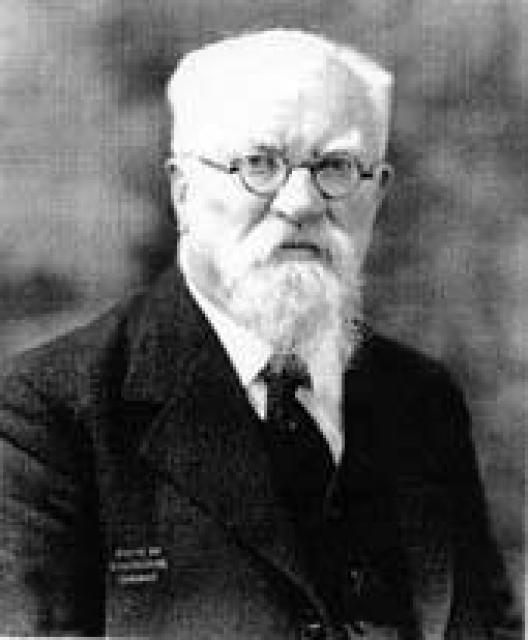
Jonas Sliupas
 Germany
- Jonas Šliūpas: A Lithuanian Luminary
- Early Life and Education
- Political Activism
- Literary Beginnings
- Political Exile and Journalism
- Literary and Cultural Contributions
- Diplomatic Service and Academic Career
- Later Life and Legacy
Jonas Šliūpas: A Lithuanian Luminary
Jonas Šliūpas (1861-1944) was a multifaceted Lithuanian intellectual and public figure who left an enduring mark on Lithuanian society, culture, and politics.

Early Life and Education
Šliūpas was born in a wealthy peasant family in Lithuania. He excelled in his studies, graduating first in his class from Mitau Gymnasium (Jelgava, Latvia). He briefly studied history and philology at Moscow University but then transferred to the law faculty. In 1882, he enrolled in the natural sciences department at St. Petersburg University and became involved in the student movement.
Political Activism
Šliūpas was a staunch advocate for Lithuanian independence and social justice. He joined the I Proletariat, a revolutionary student group, and contributed to the underground newspaper "Aušra." For his participation in a student demonstration, he was expelled from university and returned to Lithuania.
Literary Beginnings
Undeterred, Šliūpas began writing prolifically. He penned his first book, "Vargai, jų kiltis ir vaistas nuo jų" (1883), on the causes and remedies of poverty. After unsuccessfully attempting to enter the University of Geneva, he became the editor of "Aušra," the first Lithuanian literary and social newspaper (1883-1884).
Political Exile and Journalism
Due to persecution by Prussian authorities, Šliūpas emigrated to the United States in 1884. He studied medicine at the University of Maryland (1889-1891) and later practiced medicine until 1917. Simultaneously, he edited several Lithuanian periodicals, including "Unija" and "Lietuviškasis balsas."
Literary and Cultural Contributions
Šliūpas's literary criticism promoted realism and social engagement in literature. His influential historical work, "Lietuviški raštai ir raštininkai" (1890), provided the first comprehensive account of Lithuanian literature.
Diplomatic Service and Academic Career
After Lithuania declared independence in 1918, Šliūpas served as its first diplomatic representative in Washington and London. In 1919, he returned to Lithuania and taught history at various schools. From 1924 to 1930, he taught the history of medicine at Vytautas Magnus University in Kaunas.
Later Life and Legacy
In recognition of his contributions to science and culture, Šliūpas received honorary doctorates from the university in medicine, humanities, and law. He relocated to Palanga in 1930 and served as its mayor from 1933 to 1938. With the approach of the Soviet army in 1944, Šliūpas fled and died in Berlin. His ashes were later interred in Chicago.
Jonas Šliūpas's legacy lives on through his numerous publications, which continue to inspire and inform generations of Lithuanians. His tireless efforts to promote Lithuanian national consciousness, social progress, and cultural enrichment have earned him a place among the most выдающийся figures in Lithuanian history.


