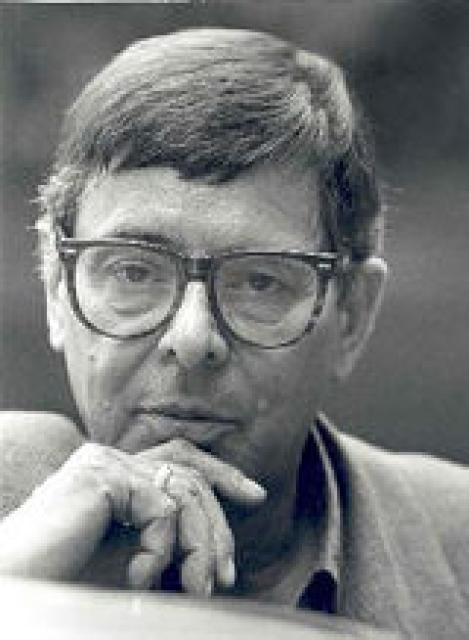
Jose Valente
 Spain
Spain- Biography of José Ángel Valente
- Early Career and Recognition
- Writing Style and Philosophy
- Major Works
- Awards and Recognition
Biography of José Ángel Valente
José Ángel Valente was a Spanish poet, literary critic, and translator of English and Italian poetry. He was born in Ourense, Spain, in 1929. Valente began his studies at the Faculty of Law at the University of Santiago de Compostela and later moved to Madrid, where he completed his degree in Romance Philology in 1954. In 1955, he went abroad and spent several years teaching Spanish language and literature at Oxford, where he obtained a Master of Arts degree.
From 1958, Valente lived in Geneva, where he worked as a teacher and international civil servant at the United Nations. From 1982 to 1985, he lived in Paris, where he headed the translation organization of UNESCO. In 1986, he moved to Almería, and later returned to Geneva and Paris. Valente continued to give lectures as a visiting professor, particularly at the University of California, Irvine.
Early Career and Recognition
Valente published his first poems while still a student. He gained recognition in literary circles in 1954 when he received the Adonais Prize for Poetry for his book "Something Like Hope." Based on his birth year and the publication of his books, he belonged to the generation of the 1950s or the mid-century generation. In the early years of his career as a poet, Valente was known for his sincerity and irony. After the publication of his book "The Innocent" in 1970, his poetry took on the character of epigrams and judgments.
Writing Style and Philosophy
Valente was never a supporter of boundaries that implied belonging to a specific literary movement represented by several writers. According to him, "it is necessary to destroy the representations of modernity. The moment has come when the writer must choose absolute solitude; he has no contemporaries." Nevertheless, Valente was part of a group of poets whose work differed from the "realistic" poetry of their predecessors while not ignoring their ethical norms. The priority of Valente's generation was the fight for a distinct literary language.
Major Works
In addition to the mentioned works, Valente's notable works include "Poems to Lázaro" (1960), for which he received the Critics' Prize, "Memory and Signs" (1966), "Seven Representations" (1967), "Short" (1968), "Presentation and Memorial for a Monument" (1970), "Interior with Figures" (1976), "Memorial Material" (1979), "Three Lessons of Darkness" (1980), for which he again received the Critics' Prize, "Seven Inspiring Cantigas" (1981), "Starting Point" (1981), "Mandorla" (1982), "The Gleam" (1983), and "To the God of this Place" (1989). Valente also wrote prose poems and stories such as "Number Thirteen" (1971) and "The End of the Silver Age" (1973). He published literary essays including "The Words of the Tribe" (1971), "Essay on Miguel de Molinos" (1974), and "The Stone and the Center" (1983).
Awards and Recognition
Valente received the Pablo Iglesias Foundation Prize in 1984. In 1989, he published a new edition of Miguel de Molinos' work "Spiritual Guide." He was a collaborator for magazines such as "Índice," "Ínsula," "Revista de Occidente," and "Poesía," as well as daily newspapers, particularly "El País" and the culture supplement of Diario 16. His works were translated mainly into French, but also into other European languages such as English, Italian, and German. In 1988, he was awarded the Prince of Asturias Award for Humanities, and in 1993, he received the National Poetry Prize. In 1998, Valente was honored with the Queen Sofia Prize for Poetry.
José Ángel Valente passed away in Geneva on July 18, 2000. In 2001, he was posthumously awarded the National Poetry Prize for "Fragments of a Future Book."


