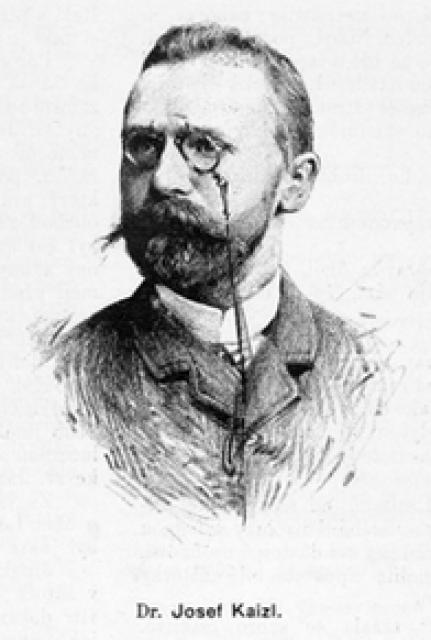
Josef Kaizl
 Czech
CzechEarly Life and Education
Josef Kaizl was born in Prague, Bohemia, then part of the Austro-Hungarian Empire. He studied economics at the University of Prague under the tutelage of Gustav Schmoller, a prominent German economist.
Academic Career
After completing his studies, Kaizl became a professor at Charles University in Prague. He authored several influential works on economics and finance, including "The Struggle for Industrial Reform in Bavaria" and "The Doctrine of Tax Transformation." He also published a comprehensive textbook on financial science in Czech.
Political Career
In addition to his academic achievements, Kaizl was also involved in politics. As a member of the Young Czech Party, he was a moderate member of the Austrian Parliament. He actively participated in debates on currency reform, advocating for the adoption of a gold standard. Kaizl also introduced several proposals for social legislation, aimed at enhancing labor protections.
Minister of Finance
In 1898, Kaizl was appointed Minister of Finance in the government of Franz Thun. During his tenure, he played a pivotal role in shaping the cabinet's anti-German and Czech-friendly policies. Despite the challenges, he managed to maintain power for a year and a half.
Later Career
After resigning from the cabinet in 1899, Kaizl returned to academia. He published several additional works, including "Passive Railways" and a political economy textbook in Czech. His comprehensive treatise on finance, originally written in Czech, was later translated into German and published in two volumes.
Legacy
Josef Kaizl was a renowned economist and political figure of his time. His academic writings and political actions contributed significantly to the economic and political landscape of the Austro-Hungarian Empire. He died in 1901, leaving behind a lasting legacy that continues to influence economic thought and policy.