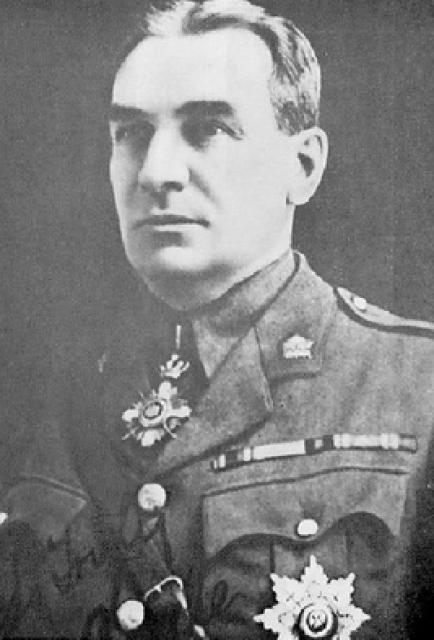
Joseph Whiteside Boyle
 Canada
- Robert Boyle: Canadian Adventurer, Gold Miner, and Spy
- Gold Mining Success
- Military Service and Espionage
- Aid to the Bolsheviks and Romanian Connections
- Post-War Activities and Death
Robert Boyle: Canadian Adventurer, Gold Miner, and Spy
Early Life and CareerRobert Boyle was born as the youngest of four children to Charles Boyle and Martha Bain. He embarked on a life of adventure at a young age, serving as a deckhand on merchant ships from 1885 to 1888. In 1889, he married Emily Raynor, but their marriage ended in divorce in 1897. After engaging in freight hauling, Boyle became the manager of boxer Frank Slavin, accompanying him to Alaska during the gold rush.
Gold Mining Success
As the era of hand-mined gold waned, Boyle shifted his focus to large-scale industrial gold mining. In 1900, he secured a concession from Ottawa to dredge for gold on a vast tract of land. In 1904, he established the Canadian Klondyke Mining Company Limited, financed by British investors. At its peak, the company operated four dredges (three of which were the largest in the world) and built a power plant supplying electricity to Dawson.
Military Service and Espionage
With the outbreak of World War I, Boyle raised and armed a volunteer machine gun corps at his own expense, earning him the honorary rank of lieutenant-colonel. Later, his men were incorporated into regular Canadian units and did not fight as a separate detachment. In 1916, he traveled to England and was subsequently dispatched to Russia in 1917. Officially acting as a consultant on narrow-gauge railways, Boyle also played an intelligence role, collaborating with famed British spy George Hill.
Aid to the Bolsheviks and Romanian Connections
After the October Revolution, Boyle and Hill actively supported the Bolshevik government, assisting in the restoration of railway operations. Hill's memoirs claim that Boyle's decisive actions cleared a bottleneck at the Moscow railway junction, but the accuracy of this account is disputed. Boyle's involvement extended to Romania, where he mediated peace talks between the Romanian government and Red forces in Bessarabia in 1918. He also secured the return of Romanian valuables evacuated to Moscow following Romania's defeat in 1916. Boyle's acquaintance with Queen Marie of Romania prompted rumors of a romantic affair, but no evidence confirms this.
Post-War Activities and Death
A stroke in May 1918 left Boyle partially paralyzed. After partially recovering, he assisted in arranging loans for Romania's postwar reconstruction and arranged for the supply of Romanian oil to England. He also unsuccessfully sought an oil concession in Soviet Russia for Royal Dutch Shell. Boyle passed away in England in 1923 and was initially buried there. In 1983, his remains were reinterred in Canada at the town of Woodstock.


