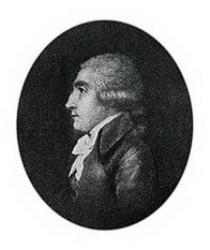
Josias Braun-Blanquet
 France
- Early Life and Education
- Contributions to Geobotany
- International Station for Alpine and Mediterranean Geobotany
- Recognition and Legacy
Early Life and Education
Josias Braun-Blanquet, one of the most influential geobotanists of the 20th century, was born in 1884 in Switzerland. He pursued his botanical studies at the University of Montpellier under the guidance of Charles Flahault. Braun-Blanquet's doctoral dissertation, completed in 1915, focused on the vegetation of the Swiss National Park.
Contributions to Geobotany
Braun-Blanquet made significant contributions to geobotanical research during his tenure as an assistant to Eduard Rübel. He developed the concept of ecological-floristic classification, which became the dominant system for classifying vegetation worldwide.
International Station for Alpine and Mediterranean Geobotany
In 1930, Braun-Blanquet founded and became the director of the International Station for Alpine and Mediterranean Geobotany (SIGMA) in Montpellier. Through SIGMA, he continued his geobotanical research and established the journal Vegetatio, which became a leading publication in plant ecology.
Recognition and Legacy
In 1974, Braun-Blanquet received the prestigious Linnean Medal from the London Linnean Society in recognition of his groundbreaking work on vegetation classification. His system, widely known as the Braun-Blanquet approach, transformed the field of geobotany and solidified his legacy as the "phytosociological Linnaeus."