Joyce Dunbar
 Great Britain
- Joyce Dunbar: A Nightmare After A 'Bunionectomy'
- The Bunionectomy Catastrophe
- The Journey of Trauma
- The Unqualified Practitioner
- The Confusion over Credentials
- The Misdiagnosis and Mistreatment
- The Lawsuit and the Aftermath
- The Wider Issue
Joyce Dunbar: A Nightmare After A 'Bunionectomy'
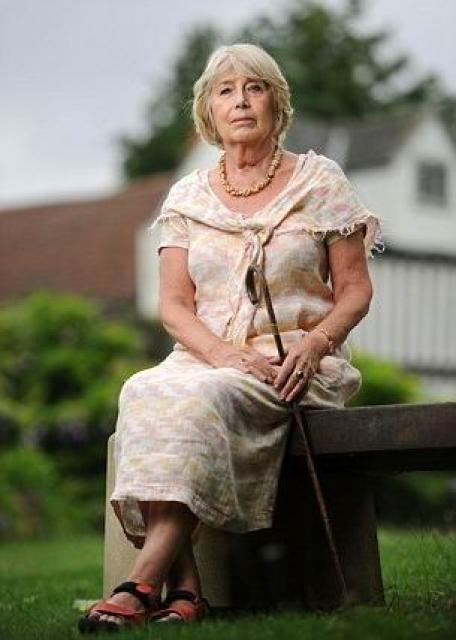
Joyce Dunbar, a renowned children's book author, has spoken out to warn others about the potential risks of "routine" bunionectomy procedures. After suffering an excruciating ordeal for seven long years, Dunbar's life has been irrevocably altered.
The Bunionectomy Catastrophe
Bunion surgery involves a highly invasive procedure that opens the joint of the big toe and involves shaving down the bone growth and shaving the enlarged metatarsal bone. Screws, pins, or plates may be implanted. Surprisingly, this major surgery is offered not only by surgeons and trained doctors in the UK but also by non-medically qualified "podiatrists."
The Journey of Trauma
Dunbar, now 71, lives in Norwich and now finds it impossible to walk without assistance. Her big toe was fractured during a bunionectomy performed by a podiatrist over seven years ago. A post-operative X-ray a month later failed to detect the fracture, resulting in a lack of treatment. Now, the damage to Dunbar's foot has become irreversible, leaving her dependent on a walking stick and struggling with sciatica. She even underwent knee replacement surgery in July 2015 due to arthritis caused by her reduced mobility.
"I have no doubt that all my problems have been compounded by not being able to walk properly and the stress that has put on my joints," Dunbar stated. "So much of what I loved in life has gone."
The Unqualified Practitioner
The £3,000 procedure is rarely provided on the National Health Service but was offered as a solution to Dunbar's severe pain while walking. The surgery was performed by Jason Hargrave, who self-identifies as a "Consultant Podiatrist" and is known for his controversial "Cinderella surgeries" that shorten toes to fit into high heels. Dunbar discovered after the procedure that Mr. Hargrave is not a medically qualified surgeon.
"I had no idea that the person operating on my foot wasn't a doctor," Dunbar said. "If I had known, I would have gone elsewhere."
The Confusion over Credentials
Becoming a podiatrist requires three years of training in treating ingrown toenails, corns, and verrucas, followed by a year of postgraduate study in surgery. In contrast, orthopedic surgeons undergo five years of core training and then a further ten years of surgical training.
The Misdiagnosis and Mistreatment
Dunbar endured "agony" for six months after the initial surgery in June 2008 at the Norfolk and Norwich University Hospital.
"My foot was very sore," she recalled. "I couldn't understand why the pain was coming from the middle of my foot rather than where the bunion had been."
"Over time, I started getting these shooting pains. A lump grew under my second toe, so it felt like I was walking on cobblestones. And then in November, the pain started to get unbearable."
The Lawsuit and the Aftermath
Unwilling to return to those who had caused her pain, Dunbar sought help from the Norfolk and Norwich University Hospitals Trust. In February 2009, an orthopedic surgeon removed the screws and shortened the patient's second toe. Unfortunately, Dunbar's condition did not improve significantly.
Determined to hold accountable those responsible, Dunbar filed a complaint against Norfolk Community Health and Care NHS Trust, which was dismissed. She then took Hargrave's employers to court in a case that began in 2010.
Bob Sharp, an Oxford University orthopedic surgeon who reviewed Joyce's medical records, concluded that her toe had been fractured when part of the bone was removed incorrectly. He described the result as a "disaster."
The defense argued that the fracture was caused by "stress on the bone." To this, Sharp argued, "The break is so straight and so flat that it's obvious it was done with a saw. Furthermore, the patient was taking a lot of weight off the foot for the first two weeks after surgery because it was so inflamed. The podiatrist caused the damage, which was negligent."
It was eventually agreed that the post-operative X-ray had failed to detect the fracture and that further treatment should have been given soon after the bunionectomy. Dunbar received a substantial compensation payment in 2012, but no amount of money can restore her former life.
Hargrave ceased working for the NHS in the same year and opened his own private ankle clinic on Harley Street.
The Wider Issue
Between April 2013 and 2014, 71 formal complaints were made in the UK about podiatry services. Three were removed from practice, three had their licenses suspended, and one received a caution. Other cases involved allegations of inappropriate sexual behavior with patients and fraud.
"The pain continues today," Dunbar concluded, "but it's more important to me now to get the message out there that the public needs to be savvy about what they are signing up for when they see someone who calls themselves a podiatric surgeon."