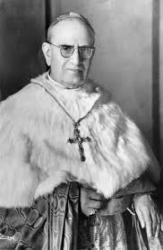
Jozef Andrzej Zaluski
 Poland
- Biography of Józef Andrzej Załuski
- Ecclesiastical Career:
- Support of Leszczyński and Exile:
- Patron of the Arts and Education:
- Political Opposition and Imprisonment:
- Library and Legacy:
- Other Works:
Biography of Józef Andrzej Załuski
Early Life and Education:Józef Andrzej Załuski was a Polish clergyman, statesman, and bibliophile born into the prominent Załuski family. The nephew of Andrzej Chryzostom Załuski and brother of Andrzej Stanisław Załuski, he received a rigorous education and became a renowned scholar.
Ecclesiastical Career:
Załuski held various ecclesiastical positions, including Bishop of Chełm and Bishop of Kiev. He collaborated with Stanisław Konarski in publishing "Volumina legum," a collection of Polish laws. He also contributed to the critique of Polish history with his "Specimen historiae criticae."
Support of Leszczyński and Exile:
Załuski was a staunch supporter of Stanisław Leszczyński, who had been deposed as King of Poland. He joined Leszczyński in Lorraine, where he spent time in exile.
Patron of the Arts and Education:
Załuski maintained relationships with numerous notable figures from Poland and abroad. He dedicated his wealth and income from his French and Polish abbeys to the establishment of a vast library. Once his library was well-stocked, he made it accessible to the public.
Political Opposition and Imprisonment:
At the Radom Confederation Sejm, Załuski opposed the expansion of rights for dissidents. This action drew the ire of Russia's ambassador, Prince Repnin, who ordered his arrest in 1767. He was sent into exile in Kaluga.
Library and Legacy:
During his forced leisure, Załuski composed a catalog of Polish books in verse, titled "Biblijoteka historyk?w, polityk?w i prawnik?w." In 1773, he returned to Warsaw and sought funds to sustain his library, which he bequeathed to the nation in his 1769 will. The library's administration was entrusted to the Commission of National Education.
In 1795, Empress Catherine II of Russia ordered the transfer of Załuski's library to St. Petersburg, where it became part of the Imperial Public Library. Despite losses during transport, 262,640 volumes of books and 25,000 engravings were safely delivered.
Other Works:
Beyond his aforementioned publications, Załuski's literary output included "Analecta historia" (1731), "Conspectus novae collectionis legum ecclesiastlcarum Poloniae" (1744), and "Bibliotheca poetarum polonorum" (1752-1756). He also wrote an autobiography in verse (1773).