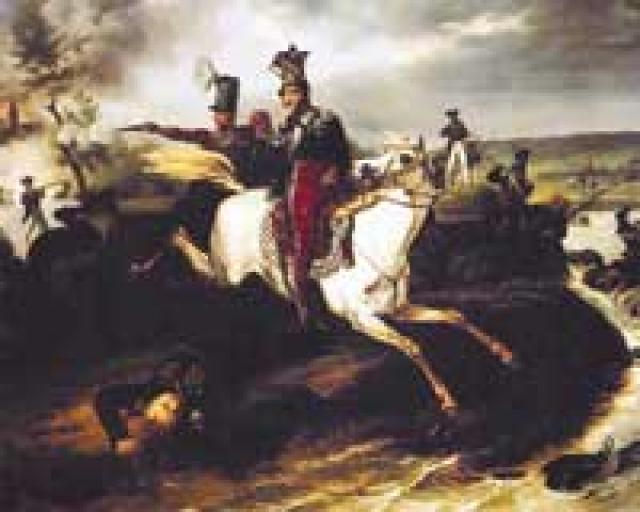
Jozef Poniatowski
 Poland
- Biography of Józef Poniatowski
- A Life of Luxury and Political Involvement
- Military Education and Early Exploits
- The Battle of Zieleńce
- Leadership and Bravery
- Last Battle and Tragic End
- The Battle of Leipzig and Death
Biography of Józef Poniatowski
Rise to Military ServiceJózef Poniatowski, a Polish general and Marshal of France, was born into a Poland torn apart by neighboring powers. Inspired by the nationalist ideas prevalent in the salons of the time, Poniatowski pursued a career in the military. Despite resistance from his mother and uncle, King Stanisław August, he traveled to Austria to receive military training with one condition: to never fight against his homeland and to join the Polish army when called upon.
A Life of Luxury and Political Involvement
Known as "Pepi" to his friends and family, Poniatowski led a life typical of the golden youth who frequented the salons of Warsaw. He was a handsome man, an excellent rider, a mischievous prankster, a ladies' man, and the best dancer in Warsaw. Some of these salons played a significant role in the cultural and political life of Polish society at the time, earning the title "When Women Ruled Us" from a Polish historian.
Military Education and Early Exploits
Poniatowski diligently studied the art of war, adapting to discipline and earning the praise of his superiors for his diligence. However, due to his youthful exuberance, he often engaged in reckless behavior. One such incident involved a bet with a fellow officer to swim across the Elbe River on horseback after heavy rainfall. Poniatowski successfully completed the challenge, leading to a legendary prediction by a Czech fortune teller: "You have conquered the Elbe, but the Elster will be your downfall."
The Battle of Zieleńce
In 1792, the Poles dared to adopt the so-called "Constitution of May 3rd," the first in Europe and fourth in the world, granting them certain liberties. The Russian government could not tolerate such defiance from its vassal state. When the Russian forces demanded a return to the previous order, the Poles refused, leading to Russian troops entering Polish territory. After a series of setbacks and retreats, the Polish command, led by Poniatowski, engaged in the Battle of Zieleńce. Although the battle was won, it only briefly delayed the Russian advance on Warsaw. However, the victory lifted the spirits and self-esteem of the Polish people.
Leadership and Bravery
Under Poniatowski's command, his soldiers witnessed his exceptional abilities: superb navigation, quick decision-making, effective leadership styles, and unwavering personal bravery. Poniatowski's generosity also endeared him to his subordinates. On their encampments, tables were set for over a hundred people, serving simple but satisfying meals. Leather pouches of free tobacco were also provided, a luxury during a time of tobacco monopoly.
Last Battle and Tragic End
In his final order, Poniatowski bid farewell to his comrades, reflecting on their shared bond and stating that although their bodies may part, their souls would remain together. However, his time as a military leader came to an end during the 1812 war. Despite fighting bravely at the Battle of Smolensk, where Napoleon himself praised his valor, Poniatowski was severely wounded. As the French retreated, he suffered from hunger and cold alongside his soldiers. He was later taken to Warsaw, where his troops greeted him with overwhelming support and loyalty.
The Battle of Leipzig and Death
Poniatowski's last battle took place at Leipzig, known as the "Battle of Nations." He successfully repelled the Austrian forces and captured their corps commander. However, Napoleon's forces were forced to retreat, and he ordered the destruction of a bridge over the Elster River as the enemy approached. In a state of exhaustion and wounded twice, Poniatowski refused to surrender, mounted his horse, and attempted to swim across the river. Both he and his wounded horse drowned. His body was later discovered by a German fisherman, who displayed the marshal, still wearing his uniform and adorned with his many accolades, for a small fee.


