
Juan Jimenez
 Spain
SpainBiography of Juan Ramón Jiménez
Juan Ramón Jiménez was a Spanish poet and the Nobel laureate of Literature in 1956. He was born on December 24, 1881 in Moguer, Andalusia. After finishing Jesuit college in Puerto de Santa María, he enrolled in the University of Seville in 1896 but soon abandoned his studies to pursue a career in journalism.
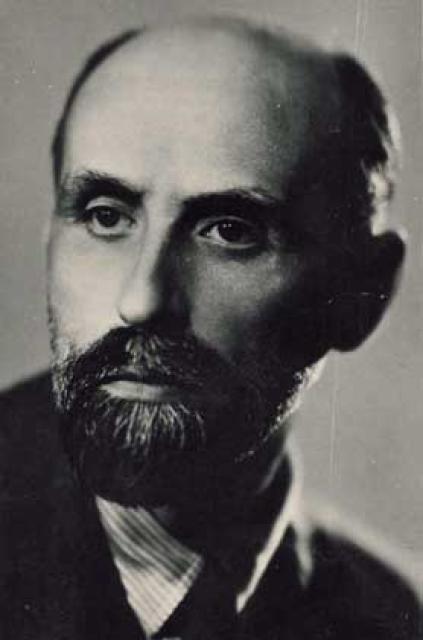
In 1901, while attending lectures at the Free Pedagogical Institute in Madrid, Jiménez met modernist poets and other young intellectuals. He embarked on a trip to the United States in 1916, then returned to Madrid and led a solitary lifestyle. In 1936, he moved from Spain to the New World and settled in Puerto Rico.
Jiménez's artistic journey, which left behind a vast poetic legacy, can be divided into three periods: early (1898-1904), modernist (1905-1915), and mature period (after 1915). His first publication was the poetry collection "Rimas" (Rhymes, 1902), followed by "Arias tristes" (Sad Arias, 1903) and "Jardines lejanos" (Distant Gardens, 1904). The defining theme of these books was a highly spiritualized love, as the poet deliberately avoided any straightforward clarity.
In his early poems, the influence of French symbolists can be observed. Later, Jiménez experienced the impact of more radical poetic movements and predominantly wrote elegies such as "Elegias puras" (Pure Elegies, 1908), "Elegias intermedias" (Intermediate Elegies, 1909), "Elegias lamentables" (Lamentable Elegies, 1910), and "La Soledad sonora" (The Resonant Solitude, 1911). Formally, these poems prominently feature musical elements (although color also plays an important role), while melancholic moods, preoccupation with thoughts of solitude and death dominate. However, another poetic cycle from those years, "Baladas de primavera" (Spring Ballads, 1910), is imbued with a sense of happiness.
In his book of poetry and prose, "Diario de un poeta recién casado" (Diary of a Newlywed Poet, 1917; later reissued as "Diario de un poeta y mar" (Diary of a Poet and the Sea)), which marks the beginning of Jiménez's third creative period, the purity of form in his early poetry is perfected. His later poems, written in the United States, were published in collections such as "Sonetos Espirituales" (Spiritual Sonnets, 1942), "Voces de mi copla" (Voices of my Couplets, 1945), "Belleza" (Beauty, 1945), "Romances de Coral Gables" (Romances of Coral Gables, 1948), and "Animal de fondo" (Deep-sea Creature, 1949). He also wrote a prose elegy, "Platero y yo" (Platero and I, 1914), which received widespread recognition in Spain.


