Juan Valdes Leal
 Spain
Spain- Juan de Valdés Leal: A Master of Spanish Baroque
- Early Life and Artistic Training
- Artistic Style and Themes
- Major Works
- Later Work and Legacy
Juan de Valdés Leal: A Master of Spanish Baroque
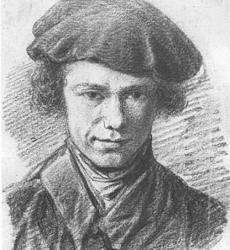
Juan de Valdés Leal was a prolific Spanish artist whose works encompassed painting, drawing, sculpture, and architecture. Born in Seville in 1622, he adopted his mother's surname, a tradition prevalent in the city.
Early Life and Artistic Training
The son of a jeweler, Valdés Leal received artistic training in his hometown. In the tradition of Diego Velázquez, another renowned Sevillian artist, he chose to use his mother's name rather than his father's. As a member of the influential Seville Academy of Painting, he played a leading role as the guild's principal administrator. His wife was also an artist, and his children followed in his footsteps as painters.
Artistic Style and Themes
Valdés Leal's style was deeply influenced by the Spanish Counter-Reformation and the dramatic mood of the late Spanish Baroque period. In contrast to the cheerful compositions of his contemporary, Bartolomé Esteban Murillo, Valdés Leal's works conveyed a profound sense of mysticism, desperation, and disillusionment.
He frequently explored the concept of "vanitas," depicting scenes of transience and mortality. His paintings often featured scenes of religious suffering, such as "The Lamentation of Christ" and "The Way to Calvary."
Major Works
Valdés Leal's most famous work is the cycle of paintings entitled "Hieroglyphs of the Last Days of Man," created for the Chapel of the Brotherhood of Mercy in Seville (1671-1672). This masterpiece showcased his mastery of dramatic lighting and expressive gestures.
Other notable works include "The Immaculate Conception with Saints Andrew and John the Baptist" (Louvre), "St. Matthew" (Museo del Prado), "St. Jerome" (Museo del Prado), and "The Assumption of the Virgin" (National Gallery of Art, Washington, D.C.).
Later Work and Legacy
During his time in Córdoba, Valdés Leal produced several significant works, including frescoes in the Convent of Santa Clara in Carmona. He spent most of his career in Seville, where he contributed extensively to the city's artistic heritage.
Many of Valdés Leal's works were lost during the Spanish War of Independence. However, his surviving pieces are showcased in prestigious museums worldwide, including the Prado, Louvre, and the National Gallery of Art. His influence on Spanish art continues to be recognized, and his works remain a testament to the emotional depth and technical brilliance of the Baroque period.