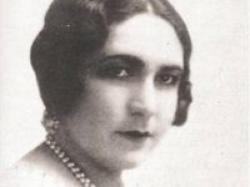
June Anderson
 USA
USA- Early Life and Education
- Career Delay and Pursuit of Education
- Vocal Development and Early Roles
- European Breakthrough and International Acclaim
- International Recognition and Expansion
- Diverse Repertoire and Vocal Prowess
- Legacy and Significance
Early Life and Education
June Anderson, an American operatic soprano, was born in Boston, Massachusetts, in 1952 and raised in Wallingford, Connecticut. She began taking vocal lessons at age 11 on her mother's encouragement. At 14, she made her first operatic appearance in Ernst Toch's "The Princess and the Pea." At age 17, she sang Gilda in "Rigoletto" and became a finalist in the Metropolitan Opera auditions, making her the youngest singer to reach the finals.
Career Delay and Pursuit of Education
Despite the temptation to launch an early professional singing career, Anderson chose to delay opera and attended Yale University, where she majored in French and graduated summa cum laude. She continued her education in law school but realized that she could not abandon her passion for opera.
Vocal Development and Early Roles
Anderson began working with renowned vocal coach Robert Leonard, who would mentor her for many years. Through intense practice and high standards, she developed exceptional breath control, allowing her voice to soar naturally and powerfully. Anderson took her time in learning roles, waiting until her voice was mature enough. She eventually became a member of the New York City Opera, debuting in 1978 as the Queen of the Night in Mozart's "The Magic Flute."
European Breakthrough and International Acclaim
Although Anderson received warm reviews from New York critics, she felt she had yet to find her signature role. Through the recommendation of Sherrill Milnes, she gained access to the European opera scene. After singing in provincial opera houses, her coloratura soprano caught the attention of Italo Gomez, the manager of Venice's La Fenice. Impressed by her voice, he invited her to select a role for her Venetian debut. She chose Bellini's "La sonnambula," a part she felt was "written for me." Anderson soon signed with Milan's La Scala, where she also performed "La sonnambula." She later sang Rossini's "Semiramide" at the opera house in Rome.
International Recognition and Expansion
Anderson decided to relocate to Italy, where she felt her career was progressing more rapidly. She became the first non-Italian to win the prestigious Bellini d'Oro prize. She performed Wagnerian repertoire in Munich, Germany, and sang Donizetti in Parma. In Geneva, she took on the role of Lucia in "Lucia di Lammermoor."
Diverse Repertoire and Vocal Prowess
Despite living in Italy, Anderson maintained an international presence, renowned for both her vocal gifts and her keen intellect. In 1986, she made her Covent Garden debut in "Semiramide," receiving critical acclaim. She returned in 1987 to sing "Lucia di Lammermoor." Anderson took great interest in lesser-known works by bel canto composers while also performing standard Verdi repertoire.
Legacy and Significance
June Anderson's vocal artistry captivated audiences worldwide, earning her comparisons to legendary singers like Joan Sutherland, Jennie Tourel, and Nellie Melba. As a leading prima donna in Europe and America, she made numerous recordings of operas and concert performances. Anderson once remarked, "Singing is what I do, but it is not who I am."