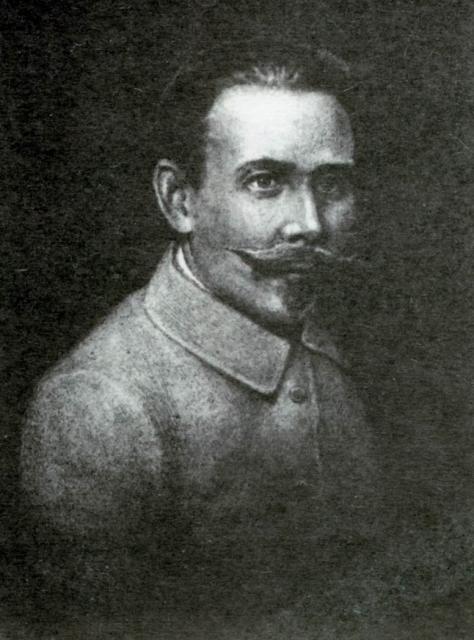
Juozas Zikaras
- Petras ZiKaras: A Sculptor's Journey
- Formal Studies at the Academy of Arts
- Unveiling of "Mother" and Mobilization
- Return to Lithuania and Artistic Contributions
- Mastery in Monumental-Decorative Sculpture
- Portraits and Commemorative Works
- Notable Commissions
- Legacy and Recognition
- Legacy in Numismatics
Petras ZiKaras: A Sculptor's Journey
Early Life and EducationPetras ZiKaras was born in Lithuania and embarked on his artistic career at the Drawing School of I.P. Trutnev. Subsequently, he honed his skills at the evening drawing classes of Juzef Montvilla in Vilnius (1904-1906). In pursuit of higher education, ZiKaras traveled to Saint Petersburg and attended the School of the Society for the Encouragement of the Arts (1907-1910).
Formal Studies at the Academy of Arts
In 1910, ZiKaras's talent earned him a place at the Academy of Arts in Saint Petersburg, where he studied sculpture under the tutelage of professors G.R. Zaleman and V.A. Beklemishev. However, his studies were interrupted by his mobilization into the army in 1915.
Unveiling of "Mother" and Mobilization
Despite the disruption of war, ZiKaras continued to create. His unfinished sculpture "Mother" was included in an exhibition of diploma works, resulting in his being awarded a diploma and silver medal in October 1916.
Return to Lithuania and Artistic Contributions
After demobilization, ZiKaras returned to Lithuania with his family in 1918. His artistic talents flourished in his home country, where he held teaching positions in gymnasiums and art schools. ZiKaras's creations included monumental sculptures such as the Statue of Liberty in Panevėžys (1922), as well as sculptures, busts, and bas-reliefs.
Mastery in Monumental-Decorative Sculpture
ZiKaras's legacy lies in his monumental-decorative sculptures, most notably his "Statue of a Bookcarrier" (bronze, 1928-1939) in Kaunas and the "Guardians of the Bank" (1931) in Panevėžys. These works showcase his mastery of form and symbolism.
Portraits and Commemorative Works
ZiKaras's artistic repertoire extended to realistic sculptural portraits. He created busts of notable figures such as writer Jonas Basanavičius, historian Simonas Daukantas, and poet Vincas Kudirka. Additionally, he designed commemorative medals and reliefs honoring historical figures and events.
Notable Commissions
Among ZiKaras's significant commissions was the creation of the tombstone for M.K. Čiurlionis (1931) in Vilnius. However, his most renowned work remains the Statue of Liberty in Kaunas, which became a symbol of Lithuanian independence and was restored after the fall of the Soviet Union.
Legacy and Recognition
Petras ZiKaras's contributions to Lithuanian art are deeply respected. His works adorn public spaces, museums, and the residence of the Lithuanian president. He received numerous awards and accolades, including the Order of the Three Stars and the Lithuanian State Prize. The sculptor's birthplace and the house he lived in in Kaunas have been transformed into memorial museums.
Legacy in Numismatics
ZiKaras's artistic influence extended beyond sculpture. He designed the models for the coins of independent Lithuania (1918-1940). His designs adorned distinctive coins, including the 10th Anniversary of Lithuanian Independence medal (1928) and the Medal for Excellent Military Service (1940).




