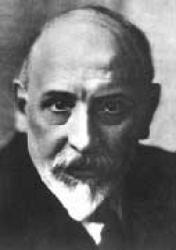
David Herbert Lawrence
 Great Britain
- Biography of David Herbert Lawrence
- Early Career and Literary Success
- Later Life and Controversies
- Literary Legacy
Biography of David Herbert Lawrence
David Herbert Lawrence was an English novelist, poet, and essayist who was born on September 11, 1885, in the mining village of Eastwood, Nottinghamshire. He was the fourth child in a family of a miner. After completing his education at Nottingham Boys' High School, Lawrence worked at a medical technology factory for a few months. He then became a teacher without formal qualifications and later completed a two-year teaching course at the University of Nottingham. He started teaching at a school on the outskirts of London and began working on his first novel. In 1909, he had some of his poems published in the journal 'English Review' edited by F. M. Ford. Ford helped Lawrence publish his first novel, "The White Peacock," and introduced him to the literary circles in London.
Early Career and Literary Success
While working on his second novel, "The Trespasser," and the initial version of "Sons and Lovers," Lawrence was deeply affected by the death of his mother from cancer in December 1910. Due to his own deteriorating health, he left teaching and focused entirely on his literary work. In 1912, Lawrence fled to Europe with Frieda Weekley (formerly von Richthofen), the wife of a professor from Nottingham. In 1913, he published his first collection of poems and the novel "Sons and Lovers." He also began working on a novel initially titled "The Sisters," which later split into "The Rainbow" (1915) and "Women in Love" (1920). In 1914, his first collection of short stories, "The Prussian Officer," was published.
Later Life and Controversies
After England entered World War I, Lawrence was prohibited from leaving the country. Despite facing bans and censorship, he continued to write and publish. He traveled extensively to Italy, Sicily, Ceylon, Australia, and the United States, where he lived on a ranch near Taos, New Mexico. He also visited Mexico. Lawrence produced novels such as "The Lost Girl" (1920), "Aaron's Rod" (1922), "Kangaroo" (1923), and "The Plumed Serpent" (1926), as well as several collections of essays, numerous short stories, and poems. His books "Psychoanalysis and the Unconscious" (1921) and "Fantasia of the Unconscious" (1922) provided insights into his worldview.
In 1926, Lawrence completed the first of three versions of "Lady Chatterley's Lover," which he published privately in 1928. In 1929, his exhibition of paintings in London was closed by the police, who accused him of obscenity. Lawrence passed away on March 2, 1930, in Vence, France.
Literary Legacy
Although many consider Lawrence's short stories to be the best part of his literary legacy, it is his novels, including "Sons and Lovers," "The Rainbow," "Women in Love," and "Lady Chatterley's Lover," that establish him as an outstanding writer of the 20th century. "Sons and Lovers" explores the destructive forces that impact the consciousness, will, and spirit. Lawrence's ability to accurately recreate the social, psychological, and historical backdrop of England during the industrial revolution is striking. In "The Rainbow," Lawrence depicts the gradual maturation of modern consciousness within the Brangwen family, farmers from central England. The close blood ties that bound the family before the industrial revolution weaken, and the writer portrays the love relationships of three generations of Brangwens, with the last representative, Ursula, being a vibrant and strong modern woman. "Women in Love" lacks the social optimism of "The Rainbow" and is overshadowed by the shadow of World War I, which is constantly present in the book, reflecting the bitterness and anticipation of Europe's inevitable cultural decline. In the post-war period, Lawrence concluded that it is not enough to try to save the new social consciousness; one must change the social structure itself. He believed that all citizens should submit to the will of one person, a personality similar to Carlyle's "heroes," a living embodiment of the divine, a Platonic philosopher-king. This idea is expressed in Lawrence's so-called "leader" novels, including "Aaron's Rod," "Kangaroo," and "The Plumed Serpent." In his last novel, "Lady Chatterley's Lover," Lawrence expresses a faint hope that only a few fortunate individuals, blessed with a true connection between a man and a woman, can escape the pressures of society.