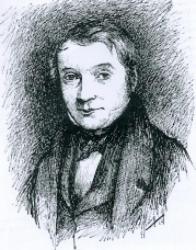
Kare Bremer
 Sweden
- Early Life, Education, and Family
- Academic Career
- Contributions to Botany
- Plant Phylogeny and Classification
- Floral Phylogenetics
- Molecular Evolution
Early Life, Education, and Family
Kore Bremer was born on January 17, 1948, in Lidingö, Sweden. He is a renowned Swedish botanist and the son of Eric and Margit (née Andersson) Bremer. His wife, Birgitta Bremer, is also an accomplished Swedish botanist. Together, they have two children: Oscar (born 1981) and Hanna (born 1983).
Academic Career
Bremer earned his Doctor of Philosophy degree in botany on June 1, 1976. He held various positions at Stockholm University, including Assistant Professor and Associate Professor, from 1972 to 1975 and 1976 to 1980, respectively. From 1980 to 1989, he served as Chief Curator in the Department of Phanerogamic Botany at the Swedish Museum of Natural History. Subsequently, he became Professor of Systematic Botany at Uppsala University from 1989 to 2004.
On February 1, 2004, Bremer became the Rector of Stockholm University, a position he holds to this day.
Contributions to Botany
Phylogenetic SystematicsBremer, along with H.-E. Wanntorp, pioneered the application of cladistics in botany with their seminal paper, "Phylogenetic systematics in botany" (1978). This approach revolutionized the study of plant evolution and classification.
Plant Phylogeny and Classification
Bremer conducted extensive fieldwork in South Africa and published the first cladistic analysis of the Asteraceae family ("Tribal interrelationships of the Asteraceae", 1987). He also authored a comprehensive book on this family.
He investigated the relationships of trees in Paleotropical rainforests (Memecylon, Melastomataceae) through fieldwork in tropical Asia and contributed to the description of Sri Lankan flora.
Floral Phylogenetics
Bremer studied the relationships of angiosperm families belonging to the subclass Asteridae, collaborating on the development of new taxonomic systems for flowering plants.
Molecular Evolution
Bremer developed a novel method for identifying the base of phylogenetic trees, known as "Bremer base" (1988). He also developed new methods for analyzing historical biogeography and dating phylogenetic trees. These advancements have enabled scientists to better understand the age and distribution of flowering plants, particularly asterids and monocots.