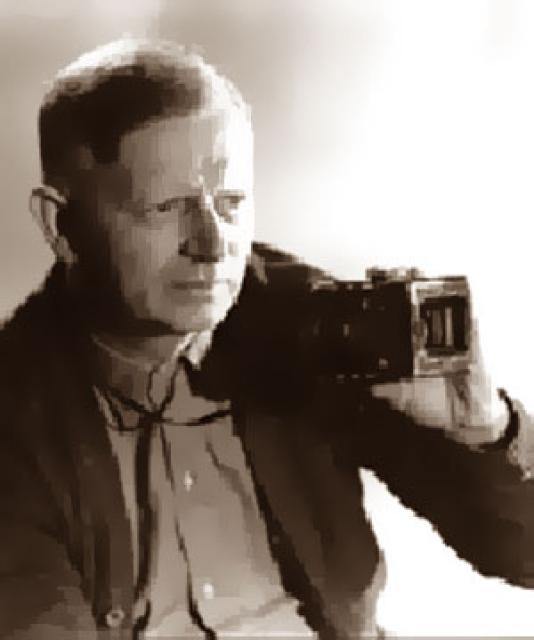
Karl Drayer
 Denmark
- Early Life and Influences
- Journalism Career and Transition to Film
- Early Filmmaking and Masterpieces
- International Acclaim and "The Passion of Joan of Arc"
- "The Passion of Joan of Arc": A Triumph of Filmmaking
- Later Career and Financial Struggles
- International Recognition and Final Works
- Legacy and Impact
Early Life and Influences
Carl Theodor Dreyer was born on February 3, 1889, in Copenhagen, Denmark. His mother, Josephine Nielsen, died shortly after his birth, and he was adopted by the Danish Dreyers, a family with strict Puritan values.
Journalism Career and Transition to Film
After completing gymnasium as the top student in his class, Dreyer left home and worked in various jobs before becoming a journalist for the liberal daily newspaper "Politiken." He wrote articles on film, theater, and literature, and eventually became a知名的journalist.
In 1912, Dreyer joined the Nordisk Film studio as a writer and editor. He soon began writing screenplays, and by 1919, he had written over twenty films for various studios.
Early Filmmaking and Masterpieces
In 1918, Dreyer directed his first film, the melodrama "The President." The film showcased his mastery of lighting, editing, and mise-en-scène.
In 1919, he released "Leaves from Satan's Book," inspired by the Griffin-esque structure of "Intolerance." Dreyer masterfully depicted the betrayal of Christ, the Spanish Inquisition, the French Revolution, and the Russian Revolutions of 1917 and 1918.
International Acclaim and "The Passion of Joan of Arc"
From 1920 to 1927, Dreyer directed seven feature films. He often moved between countries to secure funding, shooting films in Sweden, Germany, and Norway.
In 1925, his critical success "Love One Another" prompted an invitation to France, where he was offered three historical subjects. Dreyer chose Joan of Arc.
"The Passion of Joan of Arc": A Triumph of Filmmaking
Dreyer spent over a year researching and writing the script for "The Passion of Joan of Arc" (1927). He cast Maria-Renata Falconeti, an actress with a striking face and a powerful temperament, in the title role.
Falconeti's raw and emotional performance captivated audiences. Dreyer's use of close-ups and innovative camera techniques created an intimate and intense viewing experience.
Despite being cut by the Paris archbishop, "The Passion of Joan of Arc" was praised by critics and filmmakers. It was later ranked among the top films of all time by filmmakers and critics worldwide.
Later Career and Financial Struggles
With the advent of sound in film, Dreyer faced financial difficulties. He returned to journalism and wrote a substantial portion of his book "On Film."
In 1940, Dreyer returned to Denmark and secured funding for "Day of Wrath" (1943), a powerful film about witch hunts. The film's slow pacing and deliberate rhythm proved highly influential.
International Recognition and Final Works
In 1955, Dreyer's religious-philosophical film "Ordet" ("The Word") won the Golden Lion at the Venice Film Festival. The film explored themes of faith, spirituality, and the power of love.
In 1964, Dreyer directed his final film, "Gertrud," a stylish and introspective drama. The film premiered out of competition at the Venice Film Festival.
Legacy and Impact
Carl Theodor Dreyer remains a towering figure in world cinema. His distinctive style, characterized by intense realism, psychological depth, and a focus on spirituality, has influenced countless filmmakers.
Dreyer's films continue to inspire and challenge audiences, cementing his legacy as one of the most influential and important directors in history.


