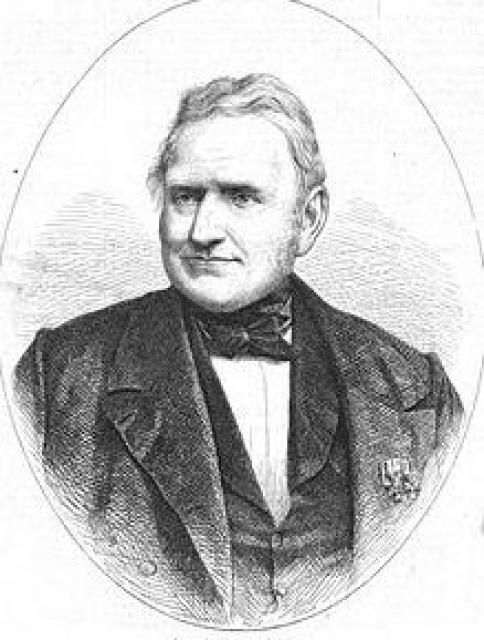
Karl Duncker
 Germany
- Karl Duncker: Pioneer of Productive Thinking
- Early Career and Gestalt Influence
- Functional Fixedness and Problem Solving
- Gradual Understanding and Problem Reformulation
- Phases of Problem Solving
- Legacy and Contributions
Karl Duncker: Pioneer of Productive Thinking
Karl Duncker, a German-American psychologist, is renowned for his groundbreaking research on productive thinking. Born in Leipzig, Germany on February 2, 1903, he received his education at the University of Berlin and Clark University, earning his Master's degree in 1926 and his Ph.D. in 1929.
Early Career and Gestalt Influence
From 1930, Duncker worked as an assistant at the Psychological Institute in Berlin. Following his move to the United States, he joined Clark University. Influenced by Gestalt psychology, Duncker commenced his psychological inquiries by analyzing movement in the context of figure-ground separation.
Functional Fixedness and Problem Solving
Duncker's seminal research centered on productive thinking. He discovered the "functional fixedness" effect, which highlights the tendency for objects used in a specific manner to become difficult to perceive and utilize in alternative ways. In 1924, alongside K. Zehner, he conducted learning experiments that yielded puzzling results, revealing that mechanical repetition of problem-solving techniques could hinder subsequent problem-solving abilities.
Gradual Understanding and Problem Reformulation
Duncker's experiments with students, where he encouraged them to verbalize their thoughts, demonstrated that comprehension occurs incrementally and gradually. The problem-solving process entails successive revisions of the problem until a formulation with solvable parameters is achieved.
Phases of Problem Solving
According to Duncker, problem-solving consists of qualitatively distinct phases: the "functional solution," where the principle is identified, and the "final solution," where the principle is applied. This concept challenged the conventional view that problem-solving is a monolithic process.
Legacy and Contributions
Duncker's insights into productive thinking have significantly influenced cognitive psychology. His work on functional fixedness and graduated understanding has essential implications for problem-solving and learning. Karl Duncker's legacy as a pioneer of cognitive psychology continues to inspire and inform contemporary researchers and practitioners alike.


